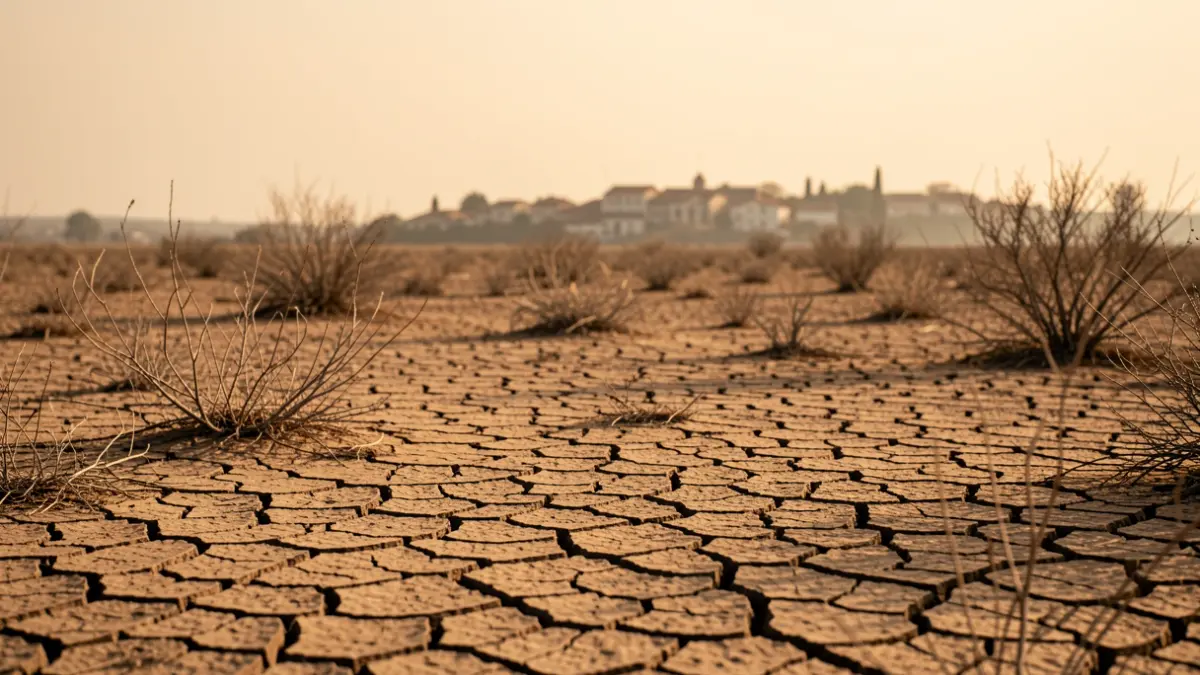
The regions of Segrià, Garrigues, Noguera, Segarra, and Solsonès registered level 3 of the Alfa Plan, indicating a very high fire danger. As a safety measure, at least twenty municipalities decided to cancel the traditional bonfires, as happened in Guissona and its hamlet Guarda-si-venes. Other towns, such as Artesa de Segre, Llardecans, Nalec, Cervià de les Garrigues, and Vinaixa, went further and prohibited activities that could generate sparks, including the launching of fireworks.
In the city of Lleida, the Paeria authorized eight bonfires in neighborhoods such as Secà de Sant Pere, Cappont, Pardinyes, Rufea, Llívia, Marimunt, Raimat, and Sucs. These bonfires were supervised by the Associació de Voluntaris de Protecció Civil (Civil Protection Volunteers Association), working jointly with emergency services. The city also received the Flama del Canigó (Flame of Canigó) at the Paeria, from where a parade departed to the parking lot on Salvador Espriu street, in Cappont, where the neighborhood bonfire was lit.
In Tàrrega, the Flame of Canigó was received by Club Alba, Penya Pedal, and the Centre Excursionista CIM de Bellpuig in the Carme square. The event included the reading of a manifesto by the Councillor for Culture, Miquel Nadal, sardanas with the Cobla Tàrrega, and a children's pyrotechnic display. A workshop was also organized to build about 25 dry straw effigies.
The tradition of the Flame of Canigó was maintained in Bellpuig, organized by Penya Pedal for over 30 years. The celebration in Ramon Folch square included a lantern workshop, a 'correfoc' (fire run) with Espurnetes and Tabalers Folls Xics, and the lighting of the bonfire in 1 d'Octubre square by Diables Foc Foll and Tabalers Folls.
In Agramunt, the Flame of Canigó arrived at the Església square, brought by local athletes. Two 'correfocs' with Diables l’Espetec were planned, and the bonfire in Fondandana square, the only one authorized, had permanent surveillance.
The town council of Vilanova de la Barca moved its bonfire from its usual location near cultivated fields to the football field's parking lot. The mayor, Albert Solsona, explained that a controlled iron brazier was used for the bonfire, and the colla gegantera (giants' group) was responsible for carrying the Flame.