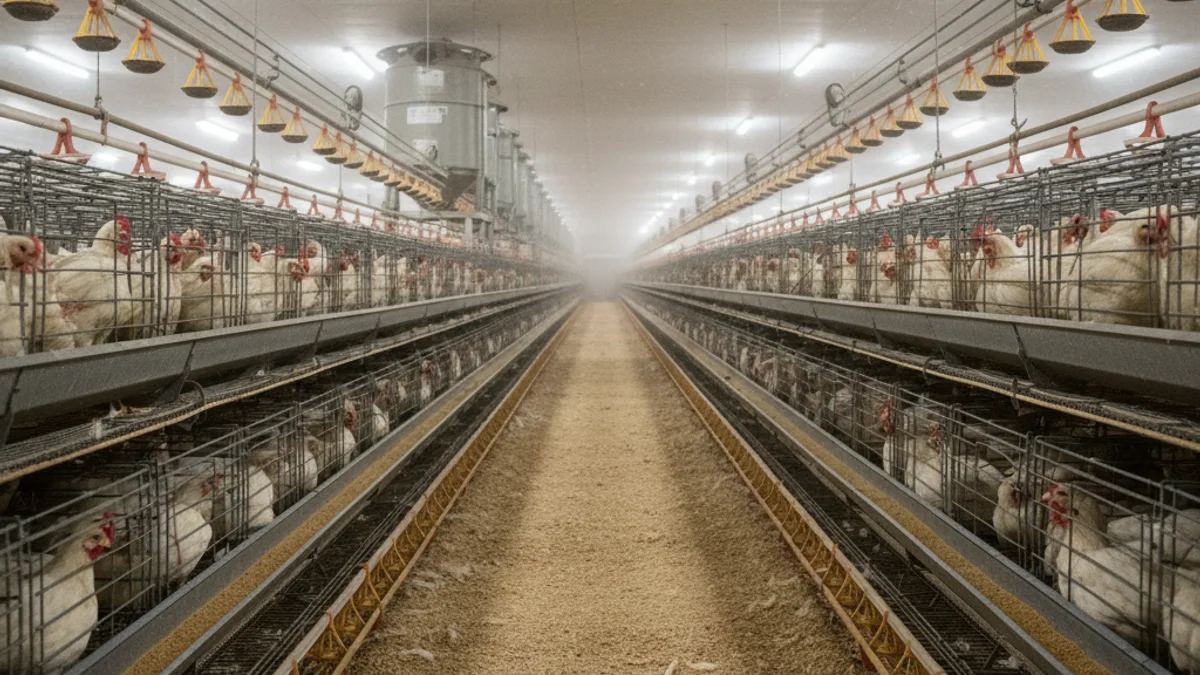
The 516 poultry farms in Lleida concentrate 50.2 percent of the total bird population in Catalonia. Of these, 365 farms are dedicated to meat production and 68 to egg production for human consumption. Almost all (99.47 percent) of these operations run under an intensive farming system, with the majority housing over 5,000 animals.
The integration model is predominant, as 70.5% of the total farms work under this contractual association between the integrator (owner of the animals and feed) and the farmer (owner of the facilities). Only 8 egg farms and 3 meat farms utilize the ecological production system.
Regarding meat production, Lleida accounts for 52.3 percent of broiler chickens in Catalonia, with 12.4 million animals registered in mid-December. This census has experienced significant growth, increasing by 5.4 percent in one year and over 59 percent in the last decade.
The province is also a benchmark in egg production, as, with data from 2024, it houses 47 percent of Catalan laying hens, totaling over 2 million animals. This stock annually produces more than 591 million eggs (49.258 million dozen).
Despite the constant growth of the sector, which aims to meet internal demand and exports, aviculture faces significant challenges. Among them is the need to maintain strict sanitary surveillance, especially after the appearance of avian flu outbreaks in the Urgell region late last year.
This sanitary context, along with increased consumption, has contributed to the price escalation. According to the National Institute of Statistics (INE), the price of a dozen eggs rose by 30.2% in the last year. This increase is partly due to the culling of over 2 million laying hens in Spain because of avian flu.