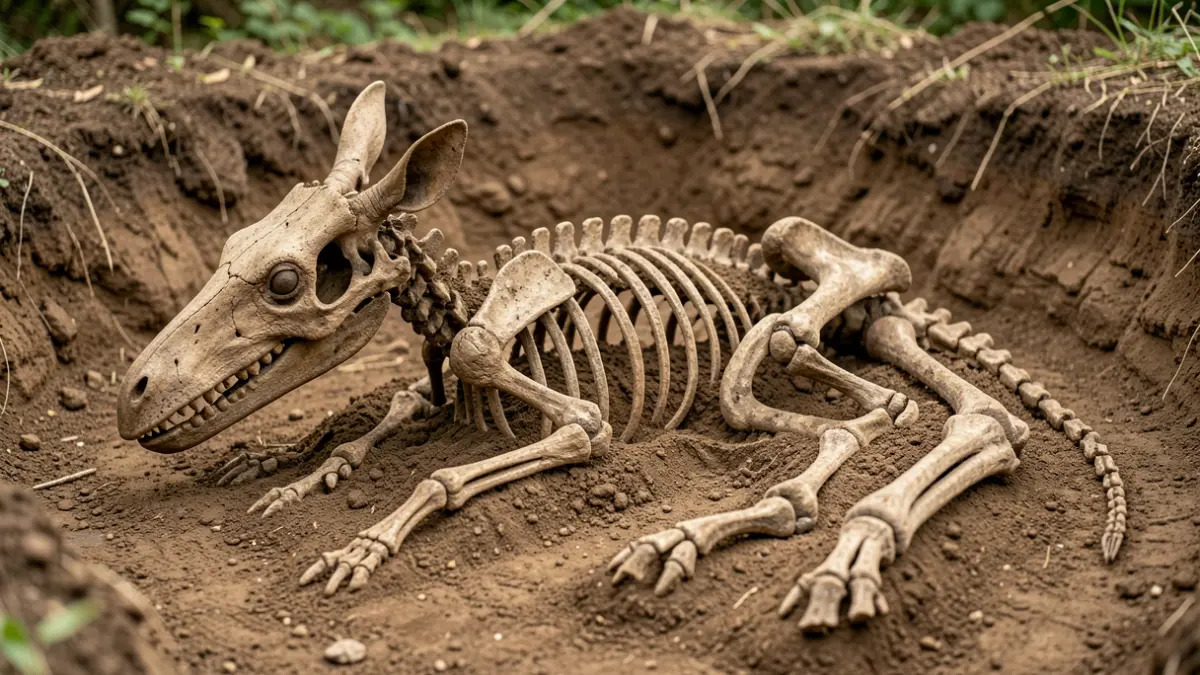
A team of researchers from IPHES-CERCA has announced an exceptional paleontological discovery at the Camp dels Ninots site in Caldes de Malavella. It is the skeleton of a tapir calf, approximately twelve months old, that lived around four million years ago when the area was dominated by an ancient volcanic lake. The skeleton's preservation, largely in anatomical connection, is a rare occurrence in the fossil record and offers a unique opportunity to study the early life stages of this extinct species.
This young specimen joins the six tapirs of the species Tapirus arvernensis previously found at the same site. The presence of adult, juvenile, and now a calf allows scientists to reconstruct the complete life cycle of this prehistoric population that inhabited Europe with unprecedented precision.
The excavation campaign, which began in May and will continue until June 18th, is being conducted by specialists who are documenting and preserving the remains using 3D digitization techniques and high-precision recording. Once the fieldwork is complete, the skeleton will be transferred to the IPHES-CERCA laboratories for detailed analysis.
Researchers emphasize that this new discovery further underscores the scientific and international significance of the Camp dels Ninots site as a window into the fauna of Europe millions of years ago.