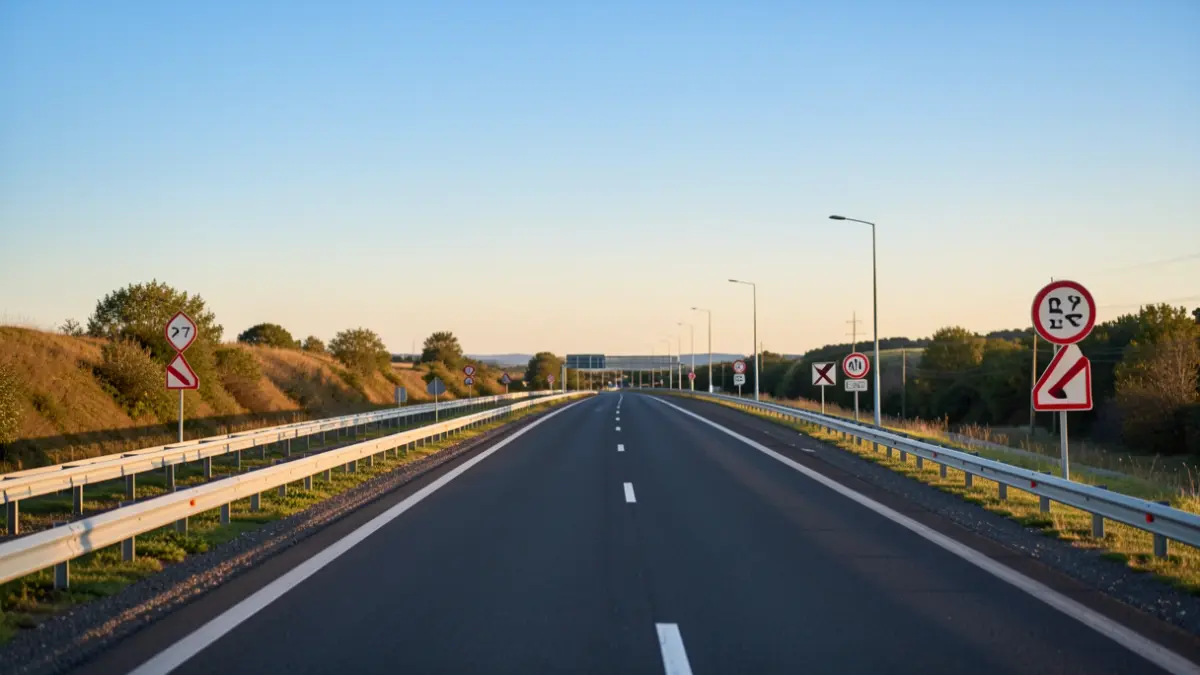
The director of the SCT, Ramon Lamiel, reported that on Monday afternoon, a slight 2% increase in vehicles was registered on the AP-7 in Martorell heading towards Tarragona, an initial indicator of the mobility associated with the eclipse. Although "nothing particularly significant" is detected this Tuesday, the main concern is the section of the AP-7 between Tarragona and the Terres de l'Ebre, where the highway narrows to two lanes.
Lamiel pointed out that, while most of the anticipated vehicles are from the same region, the highway's maximum capacity is expected to be exceeded. Therefore, it is recommended to leave early and use alternative routes such as the C-25, A-2, AP-2, A-7, and N-340 to distribute travel.
The circulation of heavy vehicles over 7,500 kg will be prohibited on the AP-7 between Martorell and Ulldecona, and on the N-340 between Vilafranca del Penedès and Ulldecona, from 2:00 PM to 12:00 AM. On the AP-7 between Ulldecona and El Vendrell, trucks must use the right lane, without overtaking, and at a maximum speed of 80 km/h.
More than 700 officers from the Mossos d'Esquadra, 180 of them from the Traffic Division, will ensure safety. Commissioner Mònica Luis highlighted the mission to prevent improper stops on the shoulders of the AP-7 and N-340 to avoid obstructing emergency services. Traffic will be regulated at the access points of municipalities with observation points, and a control center will be established in Reus.
The Ebro Delta is one of the areas with the highest expected attendance. A "capillary" regulation will be implemented in the north of the Delta and a "circular" one in the south (La Ràpita and Amposta). Regulations are also planned for Prades, Alforja, and Vilanova de Prades, as well as coastal municipalities like Cambrils, Montbrió del Camp, Altafulla, Torredembarra, and Constantí, to direct vehicles to designated parking areas outside urban centers.