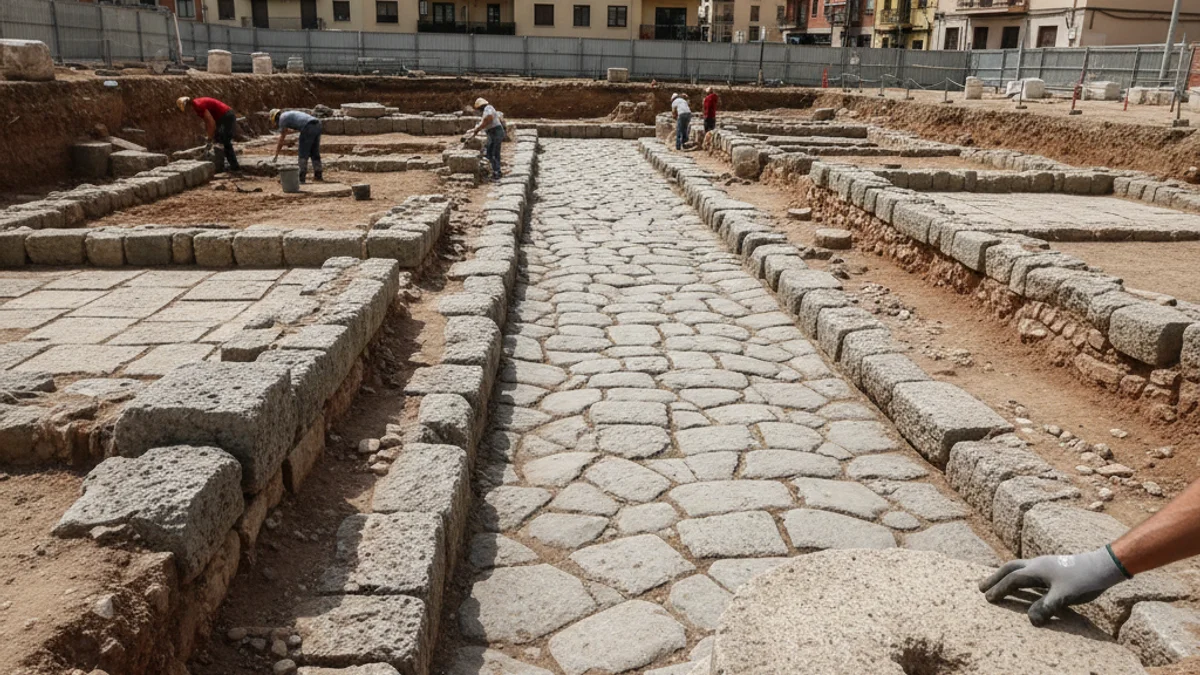
The consolidation works on the Camí de la Fonteta, a section of the road that connected the port area with the center of Tàrraco, are underway and are expected to be completed in about three months. This first phase, with a budget of 87,000 euros, aims to secure the slopes to ensure the integrity of the site, which is notable for the various mausoleums found alongside the road. The path was used from the 2nd century BC until the beginning of the 20th century.
“"Roman law prohibited burials within urban centers, so they buried people outside the city. They did this along the roads because it was a way for the deceased to be remembered. Epitaphs were placed facing the roads so pedestrians could read them; it was a way to maintain their memory."
The municipal archaeologist, Pilar Bravo, pointed out the relationship between the funerary practices of the Camí de la Fonteta and the Paleochristian Necropolis of Tàrraco, although the path predates it. Research indicates that the mausoleums, some of which contained grave goods, including small gold jewels found in 2009, belonged to wealthy families. Archaeologists plan to continue investigating the remains and open some located sarcophagi.
The second phase of the intervention, scheduled for the end of the year and with a budgeted amount of 285,000 euros, will allow the space to be opened to the public and connect Francesc Bastos street with Vidal i Barraquer avenue. The Councillor for Heritage, Nacho García, explained that the goal is to preserve the remains, which are the only Roman site owned by the Tarragona City Council, and prevent them from remaining exposed to the elements.