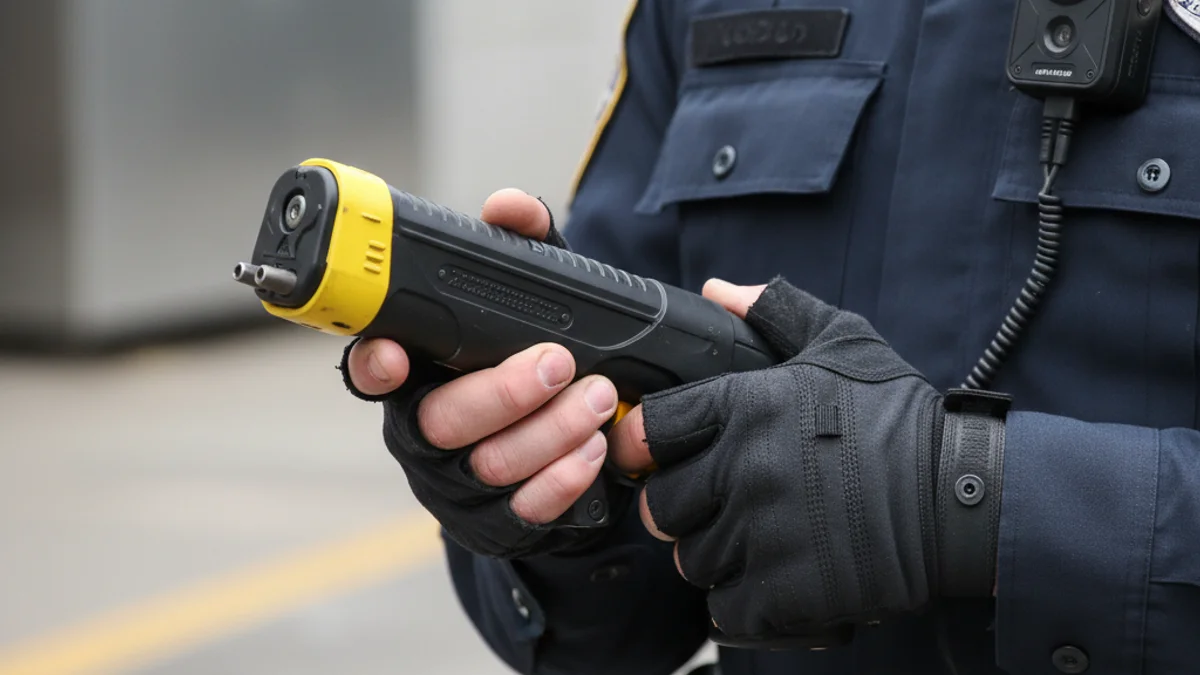
These new Electrical Conductive Devices (DCE), which serve as an intermediate tool between the police baton and the firearm, are now standard equipment for shift leaders and corporals of the Police Reinforcement and Proximity Unit (UPRP) in Tarragona.
“"With the incorporation of the DCEs, the Local Police takes a step forward in modernizing its resources and protecting everyone involved in an intervention. Furthermore, the fact that their use is always linked to body cameras reinforces our commitment to transparency and responsible, rights-guaranteeing police action."
To ensure control and transparency, the use of the DCEs is mandatory accompanied by a body camera that automatically records any intervention where the device is activated. This guarantees traceability and legal security for both citizens and officers, who have completed specific training at the Institute of Public Security of Catalonia (ISPC).
“"These devices offer us an intermediate tool that can be decisive in high-risk interventions, and always under the control provided by the body cameras, which automatically record any action."
The primary goal is to address high-risk situations while minimizing the need to use more harmful means. The use of DCEs is strictly regulated by an internal protocol aligned with current regulations, based on criteria of proportionality, necessity, and subsequent rigorous supervision.