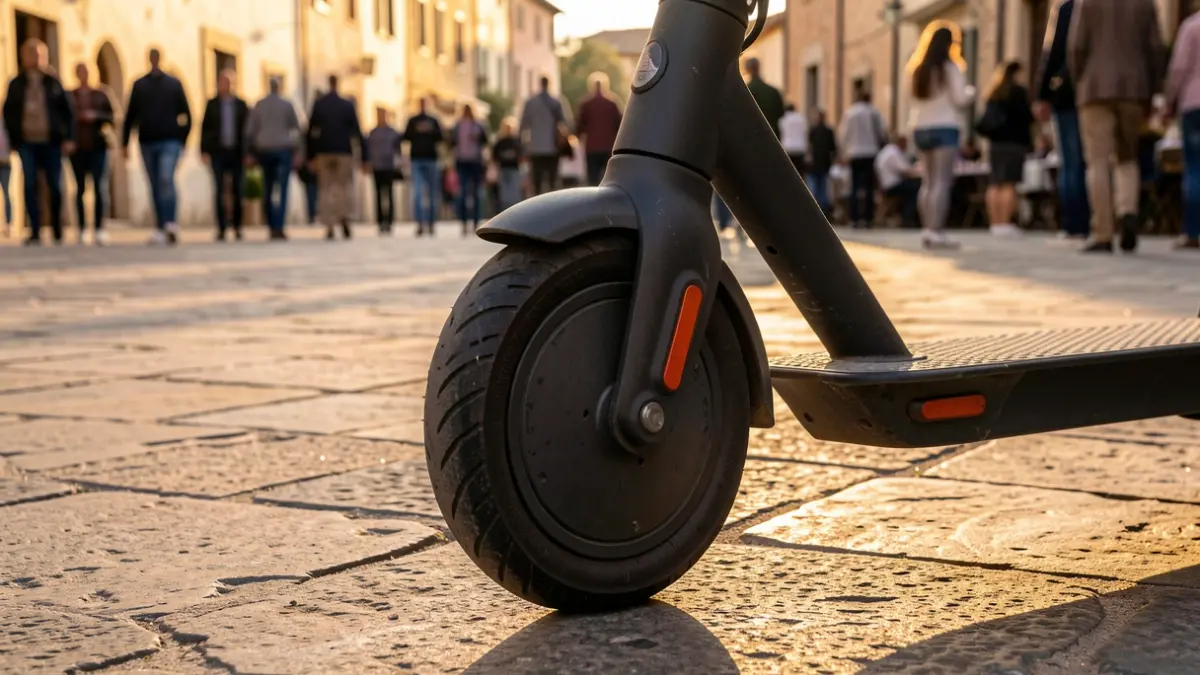
The modification to Tàrrega's traffic ordinance is now effective and aligns with state regulations. According to the Councilor for Governance, Anna Maria Farré, the measure seeks to "improve road safety and foster good coexistence between vehicles and pedestrians in public spaces".
PMV riders will be required, upon request from the Local Police, to provide proof of civil liability insurance, an official identification plate from the General Directorate of Traffic (DGT), and a circulation certificate registered with the DGT. The regulation stipulates that scooters are for single-person use, penalizing two people riding on one vehicle. The maximum permitted speed is 25 km/h, with fines ranging from 100 to 1,000 euros depending on the severity of the infraction.
To inform the public, an open informational talk will be held at the council building on Thursday, September 17th, at 7:30 PM. The city council will also distribute explanatory leaflets, particularly to young people, and share content on the entity's social media. To facilitate adaptation to the new rules, the Local Police will not impose sanctions immediately, except in cases of repeat offenses, allowing for a transition period. Improperly parked PMVs may be removed.
From October 1st, in accordance with general regulations, the minimum age to operate a PMV will be 15 years, and the mandatory use of a helmet and a reflective vest during nighttime hours will be required.
The regulations also affect several urban streets. PMV circulation is prohibited on streets like Santa Anna and Santa Maria, and in plaça del Carme, which are considered sidewalks. Other areas such as plaça Sant Antoni, plaça Major, and streets Major, Agoders, Carme, Torras i Bages, and Sant Antoni Maria Claret will have time-based restrictions, with new signage to be installed.
PMVs will primarily use bike lanes or designated routes, respecting pedestrian priority. Where these are unavailable, they must travel on the road surface as close to the sidewalk as possible, always adhering to signage and traffic rules. In single-platform zones, they will coexist with pedestrians. Parking must be in designated spots; if none exist, they can be parked where they do not obstruct pedestrian or vehicle traffic, without being attached to street furniture like trees or signs.