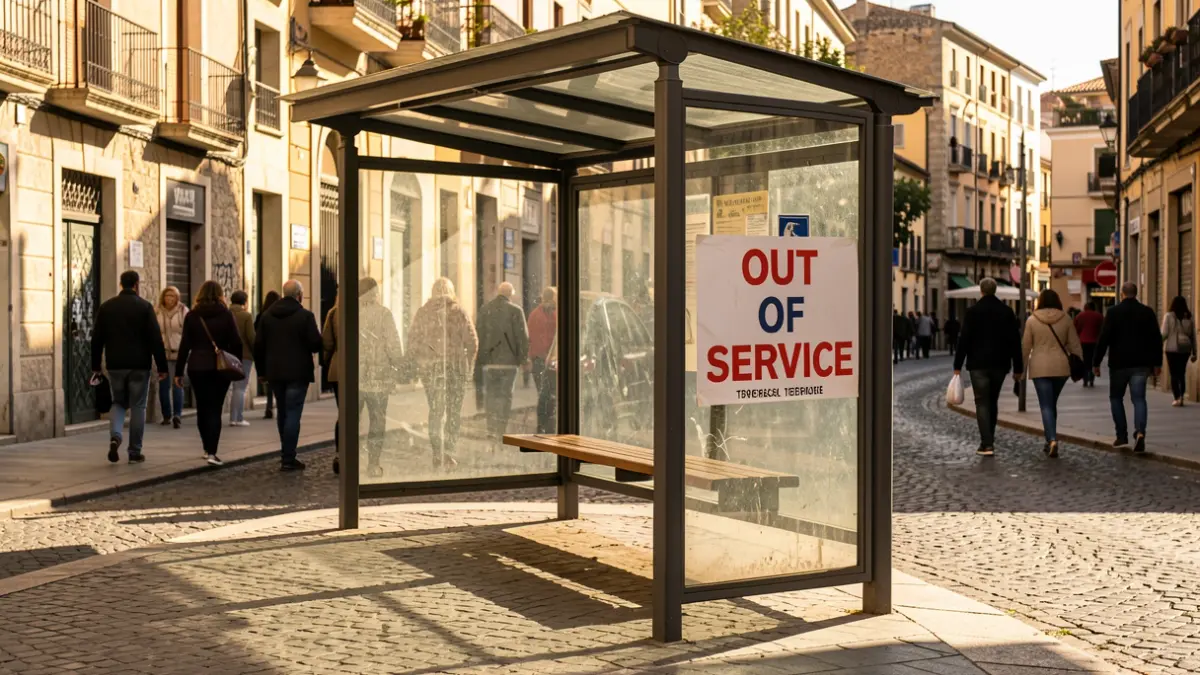
This Tuesday, June 30th, the routes of Terrassa's urban buses have been reorganized for the Festa Major celebration. Due to the impossibility of using Rambla d'Ègara as a central axis, all stops located on this avenue, from carretera de Montcada to passeig 22 de Juliol, are suspended until Wednesday, July 8th, at midnight.
Many users found the bus shelters sealed off and marked 'out of service', causing confusion. Residents using the middle section of the Rambla stops have to travel further to catch the bus.
For users catching buses heading south, temporary stops have been set up on Carrer de Galileu, between Vázquez de Mella and Fra Bonaventura Gran streets; at Plaça de Freixa i Argemí and Ireneu street; Plaça del Progrés and Blasco de Garay street; and Infant Martí and Watt streets. Lines 1, 2, 3, 4, 5, 6, 8, 12, and 13 will pass through these stops.
The situation is more complicated for users needing to catch a bus heading north, as roadworks on Carrer d'Arquimedes prevent the use of the usual alternative route. This forces users to travel to carretera de Montcada with carretera de Martorell (south) or to passeig 22 de Juliol (north), as buses diverted via Avinguda Àngel Sallent do not stop there.
User complaints have focused on the alteration of usual schedules, leading to longer waiting times at the temporary stops. Additionally, intense heat, with temperatures above 30 degrees Celsius, has made the improvised, unsheltered stops particularly uncomfortable. One case was reported of a woman requiring medical attention for dizziness.
Bus drivers have also expressed frustration over traffic jams on carretera de Montcada, near the Doré roundabout, due to the road's inability to handle the volume of private cars, delivery vans, and buses.