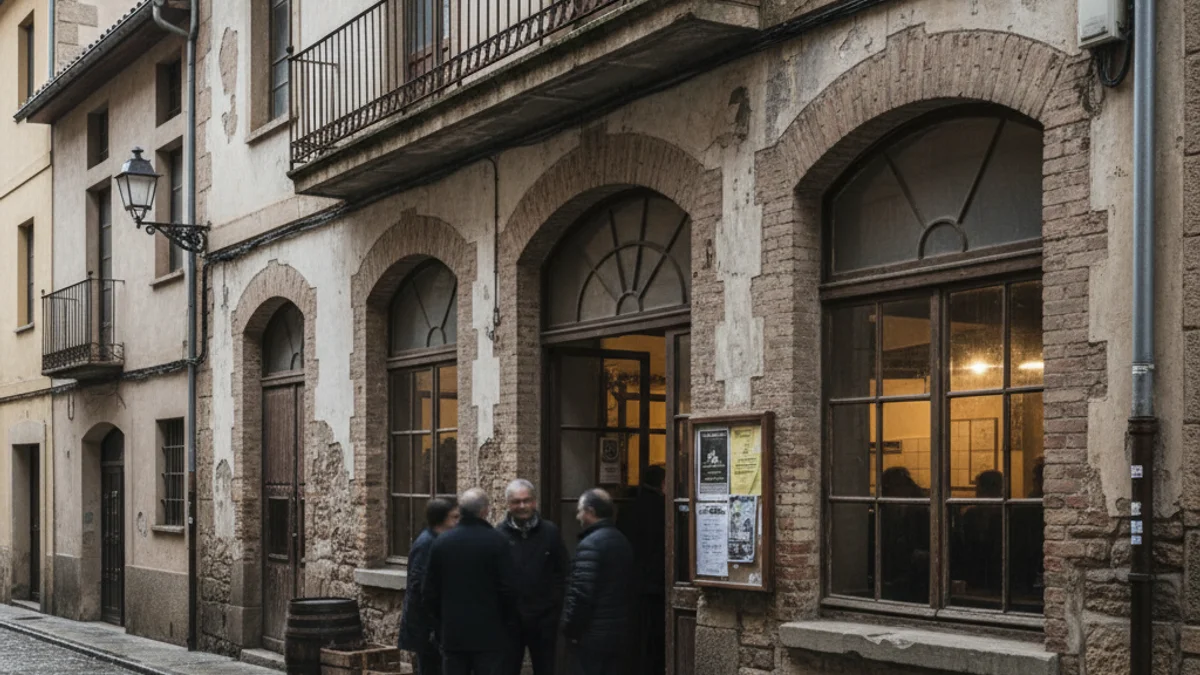
The southern area of the Gràcia neighborhood in Sabadell, limited by the railway track, the Carretera de Barcelona, and the Carrer de Sant Sebastià, was a corner with its own personality and dynamic civic activity. For many residents of Sabadell, the only known reference point in this area was the popular Cal Ral, one of the city's first swimming basins.
During the 1950s and 1960s, the inhabitants of Gràcia Sud enjoyed great self-sufficiency, with two schools (those of Mr. Buxeda and Mr. Gabriel Pujol), five grocery stores, two dairies, and various workshops and industries. The constant noise of the looms, especially from factories like Cal Gregori Germans and Paños Ramos, was the true sign of the neighborhood's identity.
This small district was the birthplace or residence of illustrious figures. Among them are the great lady of Catalan theatre, Teresa Cunillé i Rovira, the actress Núria Candela, the eminent neurologist Miquel Aguilar Barberà, and the trade unionist and politician Celestino Sánchez Ramos. In sports, footballer Oleguer Presas played for CD Lepanto, the neighborhood team, before signing with FC Barcelona.
Going to Cal Ral was a good idea. Its clients, mostly workers, had a quarter of an hour of hot water, soap, and towels for a modest price, at a time when not all homes had showers.
The social meeting points were the cafes La Bombilla (also known as Bar Montserrat) and Bar Joventut. The latter experienced great success in 1959 when its owner, Magí, installed a television to watch the first live televised football match, a Madrid-Barça, filling the premises to capacity and forcing him to convert the upstairs floor for customers.