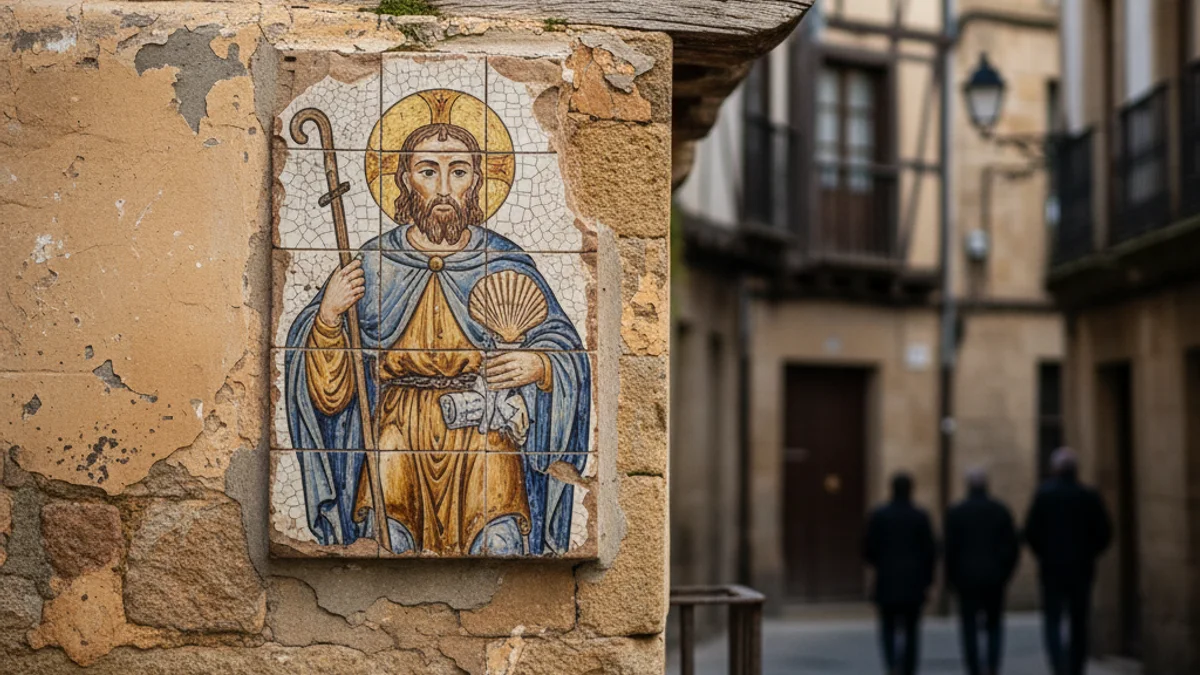
The Sant Jaume plaque, often overlooked by pedestrians heading to the CAP Sant Llàtzer or the Hospital Universitari Mútua Terrassa, is located at the entrance of Sant Jaume street, cornering with Puig Novell street.
This image of Sant Jaume on Valencia tile was placed by residents in 1940. However, it replaced a previous plaque that had been removed in 1936 and transferred to the Biblioteca-Museu Soler i Palet, according to former councilor Jordi Plana.
The building is particularly relevant because it was the birthplace of Gabriel Trias i Badia, founder of the Joventut Catòlica (Catholic Youth), today known as the Centre Social Catòlic (the Social). Furthermore, the same house hosted the headquarters of the Círculo Tradicionalista in 1925, an entity of Carlist and Christian inspiration.
The first documented reference to Sant Jaume street dates back to 1785, in a document by the notary Torrella. Later, in 1840, the street already had ten houses. In one of them, at number 6, Joan Vallhonrat i Prat was born, who served as mayor of Terrassa between January 1, 1906, and March 6, 1909.