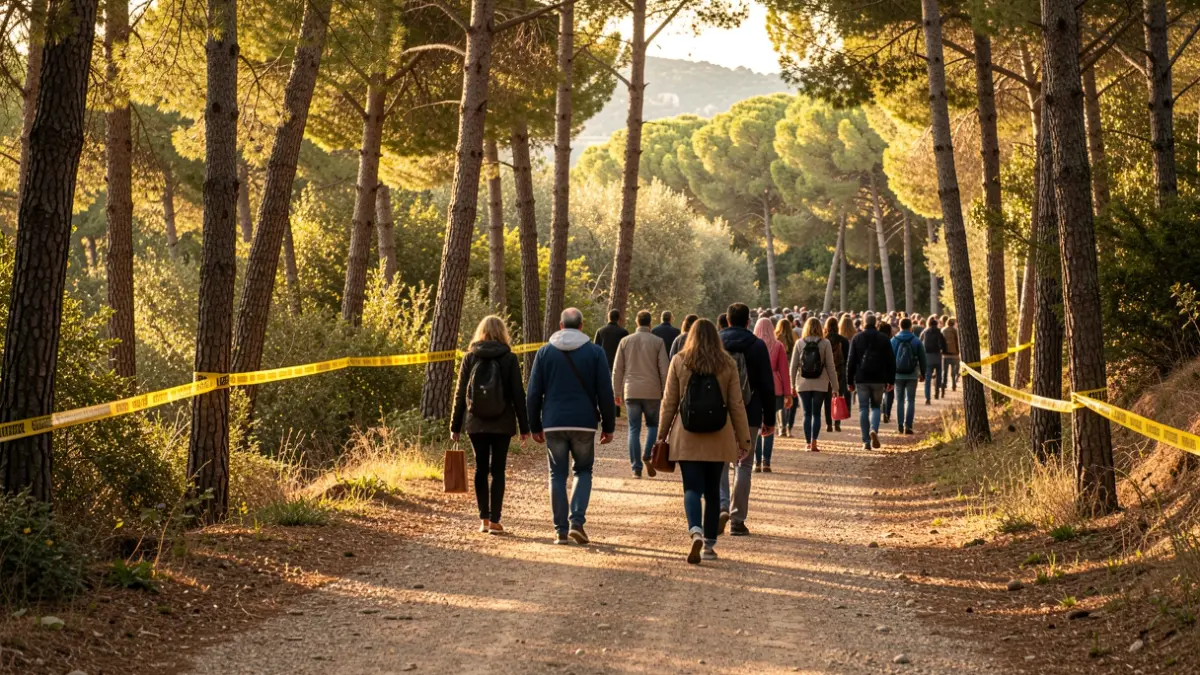
Around 200 people participated this Saturday in a popular march to demand the reopening of Collserola Park, which has been closed for almost half a year due to health restrictions to combat African swine fever. Despite the presence of Mossos d'Esquadra and Local Police, the majority of the group was able to access the park without impediment, passing under the tape barring the way.
The initiative, stemming from a Change.org petition with over 5,000 signatures, began on the path of Can Catà, in Cerdanyola del Vallès, and concluded in the Can Coll area with a communal breakfast. Organizers cite mental and physical health reasons to urge the government to ease restrictions they deem "indiscriminate and harmful".
One of the organizers, a resident of Cerdanyola del Vallès, criticized the crisis management, suggesting that control should focus on pig farm access points rather than access to natural areas. She highlighted inconsistencies in the measures, such as allowing residents' vehicles to leave without disinfecting tires while denying passage on forest trails.
Similarly, Carles Escolà, former mayor of Cerdanyola del Vallès, found it incomprehensible that activities like film shoots or access to second homes are permitted, but walking in the park is not. He stressed the need to seek alternatives and for affected businesses to lead control measures.
Public indignation was further fueled by the construction of a film set at Can Sant Joan, in Sant Cugat del Vallès, while the park remained closed. The mayor of Sant Cugat, Josep Maria Vallès, had already expressed his complaint to the Minister of Agriculture regarding this situation.
The park's closure has had a significant economic impact, with an 83% drop in visitors and approximately 100,000 euros in lost revenue. Local bars and restaurants have seen a 70% decrease in income. Furthermore, about twenty research projects on fauna, flora, and climate change have been halted.