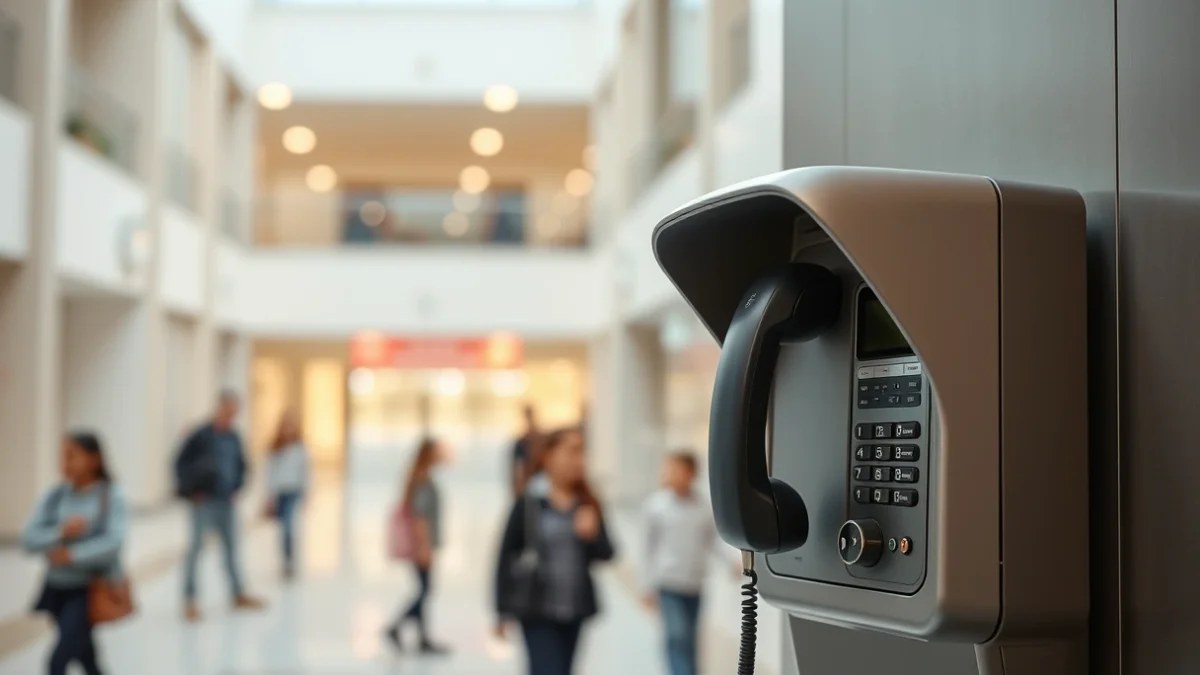
The Terrassa Municipal Plenary gave the green light on March 27 to a proposal by the PSC to establish a network of landline telephones in various city facilities. This measure primarily aims to provide a reliable communication resource for children and adolescents in situations of need or unforeseen circumstances.
“"We are at a point where many families wish to delay their children's mobile phone purchase until they are 14 or 16 years old. But they face a problem; today, mobile phones also provide peace of mind to families regarding these young people's commutes to school, the library, or other spaces they use."
PSC Councillor Carlos Lázaro emphasized during the plenary session that the initiative seeks to have a "very positive impact on family peace of mind and, above all, on the well-being and autonomy of adolescents." The proposal was approved unanimously, reflecting broad political consensus on its importance.
This network emerges as a solution for families choosing to postpone their children's mobile phone acquisition. The communication points will allow young people in Terrassa to contact their relatives in case of emergency, urgency, or any mishap, such as forgetting keys or being unsure of a meeting point.
The City Council will also launch a dissemination campaign to promote this new tool among family associations, educational centers, and sports, cultural, and leisure entities. Initially, a pilot program will be implemented in facilities near school routes to evaluate its operation before extending it city-wide. Furthermore, there are plans to explore expanding the network to businesses and entities located along these routes.