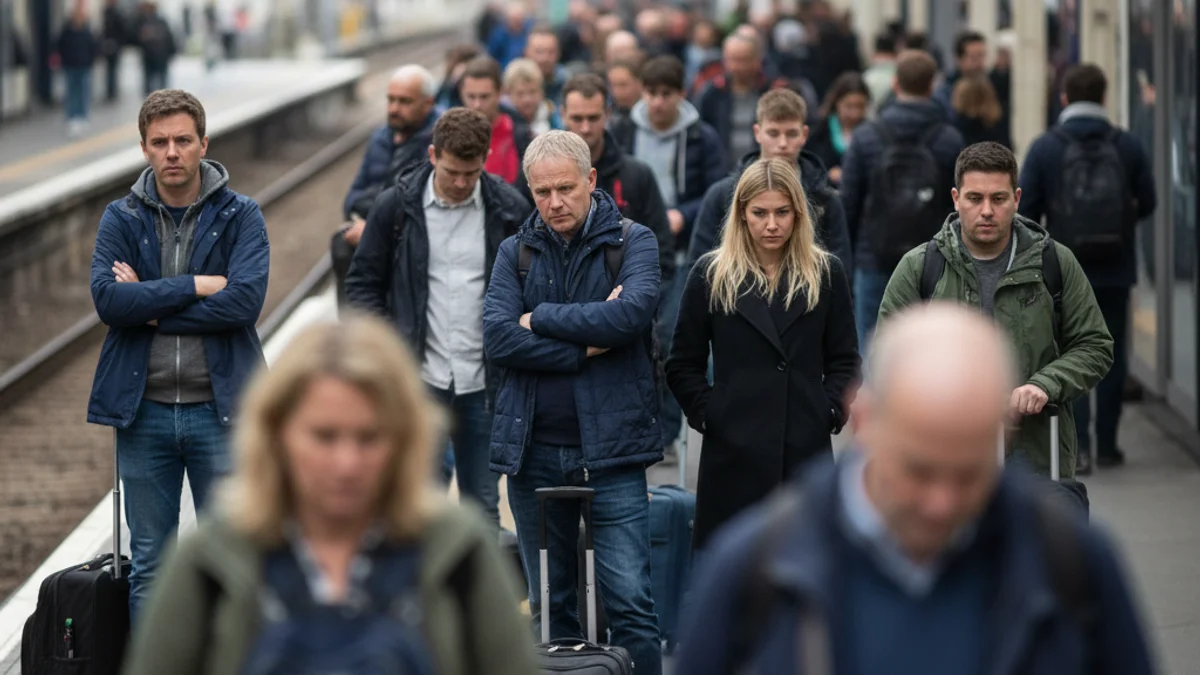
Former President Carles Puigdemont has capitalized on the most complicated week for Rodalies, marked by the fatal accident in Gelida and the covert strike by train drivers, to undermine Salvador Illa's Government. In a video recorded from Waterloo, he declared that “the trains are not working” and that the situation is due to “socialist incompetence” and “dependence on the State.”
Nevertheless, the neo-convergent party maintains its quota of power in strategic state-owned companies. Following a leadership meeting in Perpignan, where the resignation of the Minister of Territory, Sílvia Paneque, was demanded, Puigdemont insisted that “in the hands of the Spanish, the infrastructure does not work.”
The presence of Junts directors in state companies is internally viewed as an 'imposture' and 'incoherence' that contradicts the public discourse of rupture.
The economist Eduard Gràcia, considered a trusted associate of Puigdemont, has occupied a seat on the Renfe Operadora board of directors for a year. Gràcia participates in strategic decisions affecting the railway network, including budgets and investments that Junts publicly criticizes for being insufficient.
Gràcia is not the only example of this “soft power” strategy. Other figures linked to the independence movement hold positions in state companies, such as former Minister Ramon Tremosa at Aena, the communicator Miquel Calçada (Mikimoto) on the RTVE board, and Pere Soler, former director of the Mossos d'Esquadra, at the National Commission for Markets and Competition (CNMC).