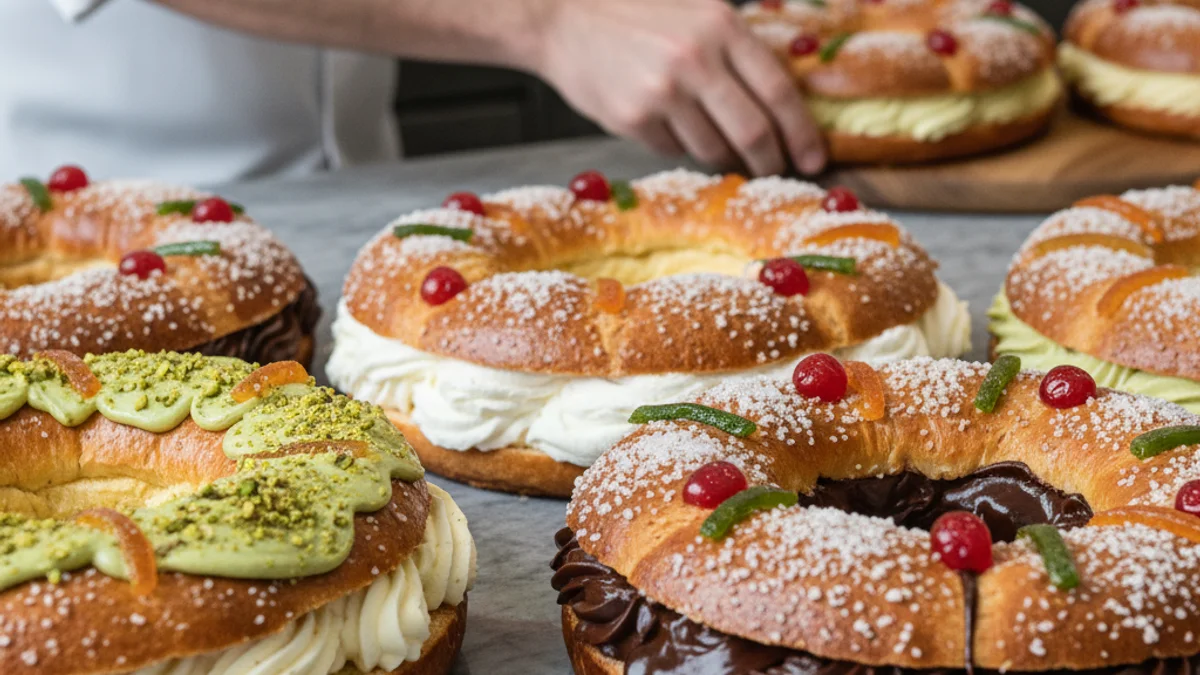
Although cream remains the overwhelming favorite filling, new trends have brought innovative flavors such as pistachio, Dubai chocolate, or Lotus biscuit. Along with truffle and pastry cream, these are the most frequent fillings for this Christmas dessert, with about 30 million units sold, according to data from the state association Asemac.
The growing interest in healthier eating and traditional preparation has boosted the demand for artisan cakes. The sector has worked hard to adapt the sweet to smaller formats, especially 500-gram pieces, and has reduced the amount of sugar. Varieties free of gluten and lactose have also been created for people with intolerances.
Despite the consumer's growing concern about avoiding industrial products, the King's Cakes sold in large supermarkets still account for 80% of total sales.
The employers' association confirms that, despite the strong presence of ultra-processed goods, artisans are gaining ground. This adaptation of flavors (such as Oreo or Kinder for younger audiences) and formats has allowed the product to become less seasonal, appearing in bakeries since early December and, in some cases, even since November.