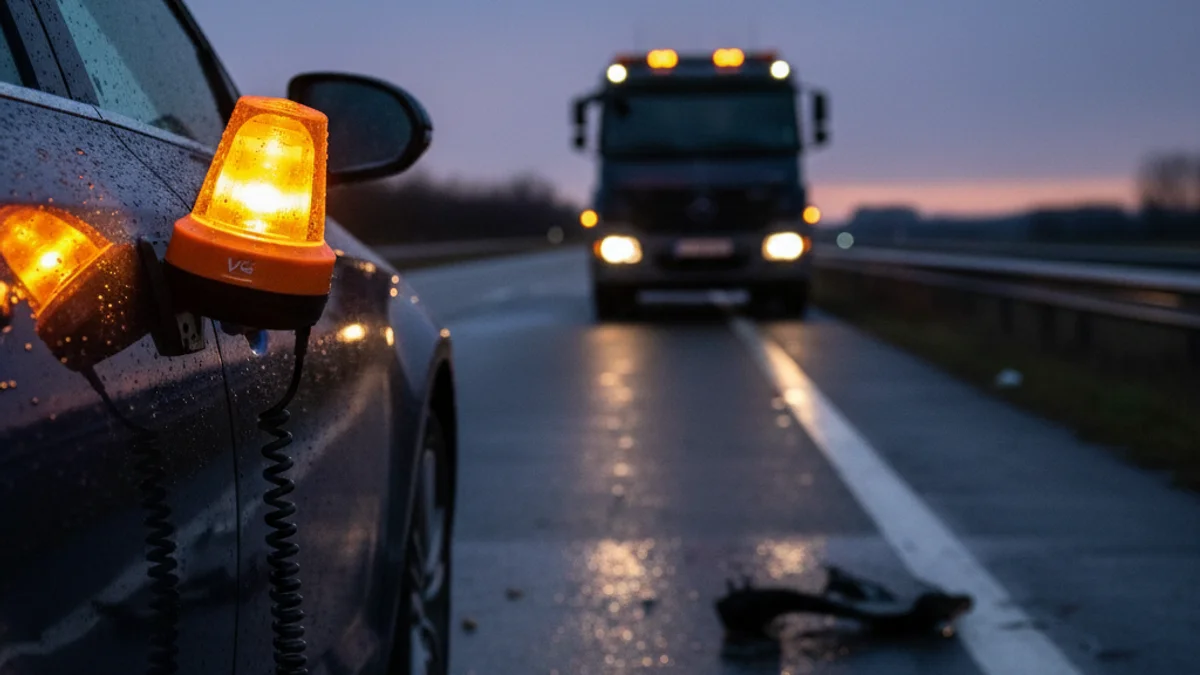
The mandatory use of connected V-16 beacons, promoted by the Directorate-General for Traffic (DGT), was intended to reduce roadside accidents by sending the exact location of disabled vehicles to the DGT 3.0 platform. However, the Guardia Civil has detected that this functionality is being exploited by organized criminal networks.
These criminals, known as 'pirate tow trucks,' intercept the distress signals or monitor incidents to arrive at the scene quickly, often using vehicles that mimic the appearance of official services to gain the driver's trust during a stressful situation.
These fraudulent services have no connection to insurance companies and demand exorbitant cash payments to release the vehicle from clandestine workshops.
The Guardia Civil emphasizes that prevention is the most effective tool. They recommend contacting the insurance company directly to confirm the tow truck dispatch and, crucially, always requesting formal identification from the operator upon arrival and verifying that the details match those provided by the central office.
Drivers should be suspicious of any tow truck operator who requests upfront payment or attempts to pressure them into moving the car to a specific garage without prior consent, as conventional insurance companies manage costs internally. The DGT and the Guardia Civil are currently working to strengthen the cybersecurity of data transmissions.