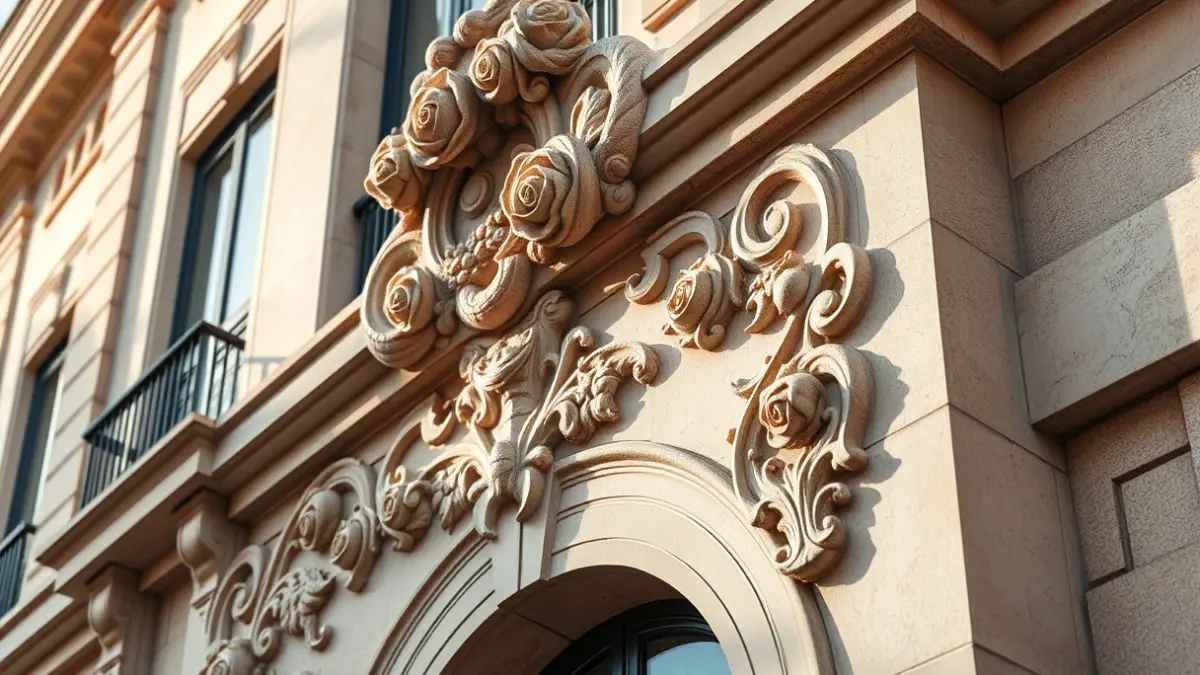
In Reus, the rose transcends its generic meaning to become a historical emblem that articulates memory, devotion, and collective representation. Its roots are closely linked to the legend of the Mare de Déu de Misericòrdia, the city's patron saint. According to tradition, during an epidemic, her appearance left the imprint of a rose on the cheek of a young shepherdess, a gesture symbolizing protection and regeneration, which has established the rose as a symbolic mark of the Reus community throughout the centuries.
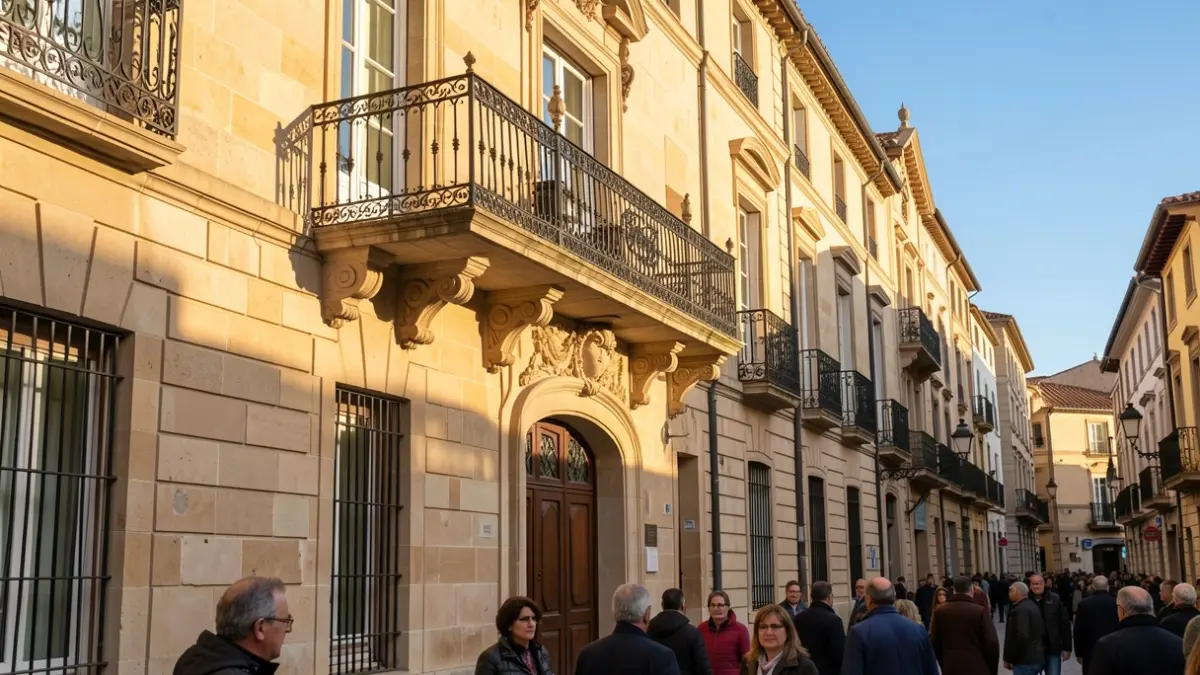
This identity dimension is eloquently manifested in the city's architectural fabric. Reus, recognized for the quality and density of its modernist heritage, offers a privileged field to observe the persistence and re-signification of this floral motif. Within the context of a bourgeois culture deeply marked by the transformations of industrialization, modernist language systematically resorted to vegetal forms, not only as ornament but as an expression of the desire to reintegrate nature into the built space.
The rose, due to its formal richness and symbolic depth, thus becomes a recurring element capable of conveying both aesthetic and identity values. Alongside this vegetal universe, modernist facades also display a repertoire of zoomorphic and fantastic figures, with a prominent presence of dragons. These figures evoke a reinterpreted medieval imaginary, dialoguing with the processes of cultural construction of modernity and the nation, where the idealized recovery of the past becomes a resource for defining collective identities.
A careful tour of the city allows for tracing a visual cartography of this past. The repeated presence of the rose in Reus cannot be understood as a mere decorative recurrence, but as the visible expression of a symbolic continuity between legend and matter, and between devotion and design. Exploring it, especially during spring, is to delve into a topography where the rose, multiplied in stone, iron, or ceramic, continues to articulate a collective narrative.