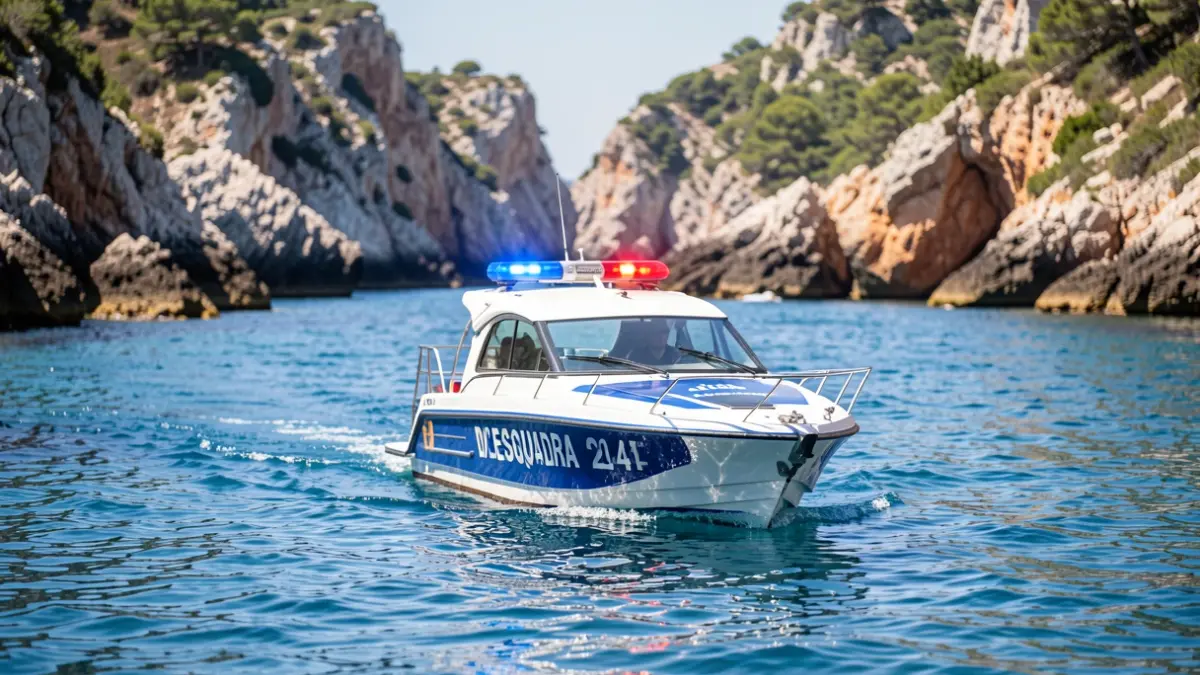
Maritime surveillance by the Mossos d'Esquadra has become more visible in the coves of the Costa Brava during the summer months. Regular users of areas like El Golfet, in Calella de Palafrugell, report that the presence of patrol boats and jet skis from the Catalan police is more frequent this year than in previous seasons, when it was more sporadic.
In addition to protected natural areas like Cap de Creus or the Medes Islands, the Central Costa Brava, between Begur and Palamós, sees significant activity with around 3,000 boats anchoring each summer. Organizations like SOS Costa Brava have historically called for increased surveillance to ensure compliance with regulations prohibiting anchoring on posidonia seagrass, and they advocate for expanding the network of ecological buoys to prevent damage to the seabed.
This increased police presence coincides with specific control campaigns for recreational maritime fishing, coordinated by the Department of the Interior, the Mossos d'Esquadra, and the Agents Rurals. Since 2022, these operations have led to the inspection of over 2,200 recreational fishermen. Data from the Generalitat indicates that between 4% and 10% of those checked were fishing without the mandatory license, a figure lower than previous estimates.
Infringements are mainly detected among occasional fishermen and foreign tourists in the most popular areas, who often are unaware of the regulations. Underwater fishing shows the highest percentage of irregularities due to a lack of licenses, while fishing from boats presents fewer issues.
Superintendent Òscar Macarella, head of the Mossos' Environmental Division, explained that the purpose of these controls is not solely punitive but also to "inform, educate, and prevent" in order to preserve marine resources. César Calabrès of the Agents Rurals pointed to the increase in visitors and lack of regulatory knowledge as reasons for the non-compliance.
The Generalitat estimates that in Catalonia, there are over 53,000 recreational maritime fishing practitioners, with around 600,000 annual outings and an economic impact exceeding 65 million euros.
This intensification of surveillance follows several incidents of vandalism against demarcation buoys for bathing areas in coves of Baix Empordà, such as Cala Estreta, Cala Corbs, and Cala Crit. In Palamós, the City Council reported about fifteen affected buoys, posing a risk to swimmers due to the proximity of boats. These events, which have been recurring since 2024, have reached the Catalan Parliament, where the Comuns party has called for increased surveillance and an investigation to identify those responsible.