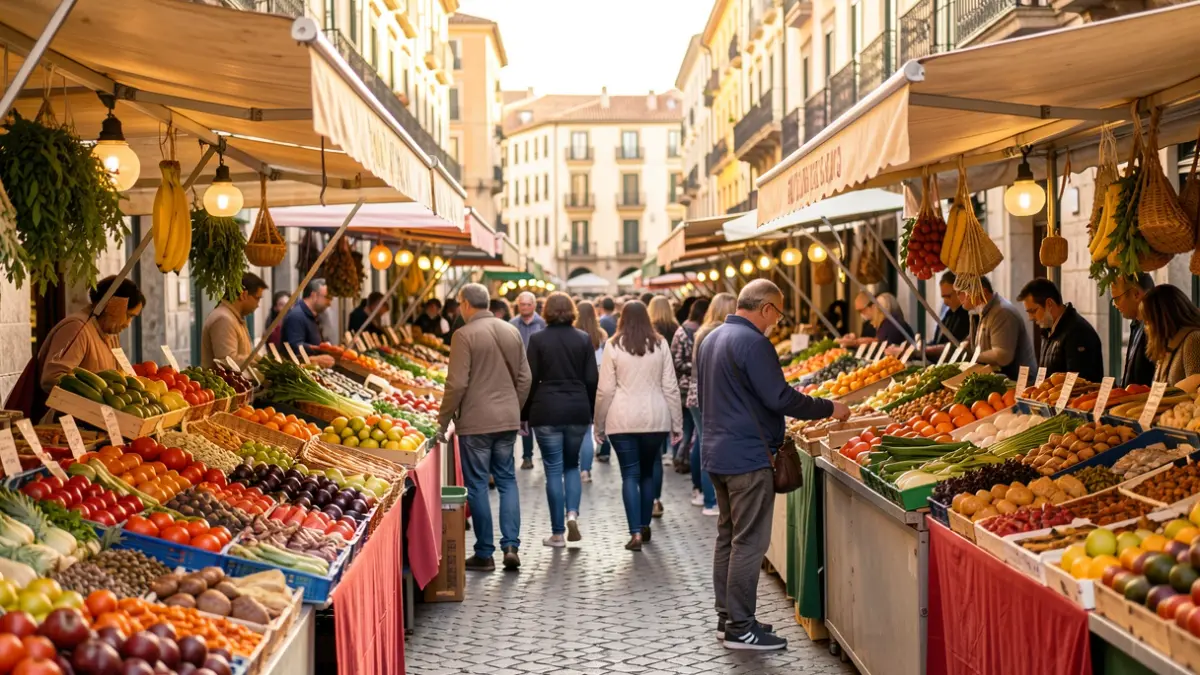
The city of Barcelona was chosen as the first European Capital of Proximity Commerce last Wednesday in Brussels, a recognition that focuses on the values and challenges of Barcelona's commerce throughout 2026. The European Union will fund the program with three million euros, which will allow for the development of over a hundred initiatives and activities in the city, a long-sought goal for the Barcelona Comerç association.
“"For the city, it must primarily mean an opportunity to update and enrich the view on what proximity commerce is today. It is not just symbolic recognition, but the possibility of incorporating knowledge."
The entity's president, Pròsper Puig, highlighted that the main objective of the capital status is to make commerce sustainable, starting with economic sustainability. Therefore, any initiative must have a real impact on activity, visibility, and the capacity to attract demand. The events agenda, coordinated by the City Council, foresees three central city events, in addition to many activities spread across the territory.
The first relevant action is being prepared for May 9, coinciding with Europe Day and Proximity Commerce Day. There will also be notable events for the inauguration and closure. Puig recalled that the idea of the capital status emerged during the pandemic, when the essential role of neighborhood commerce as a service and element of continuity of daily life became evident.
Regarding current challenges, Puig noted that many businesses are still experiencing an “economic pandemic,” dragging the financial consequences of subsistence loans. Despite competition from e-commerce, the Catalan and Barcelona model remains resilient, as physical shopping continues to be a social and recreational act that provides differential value.