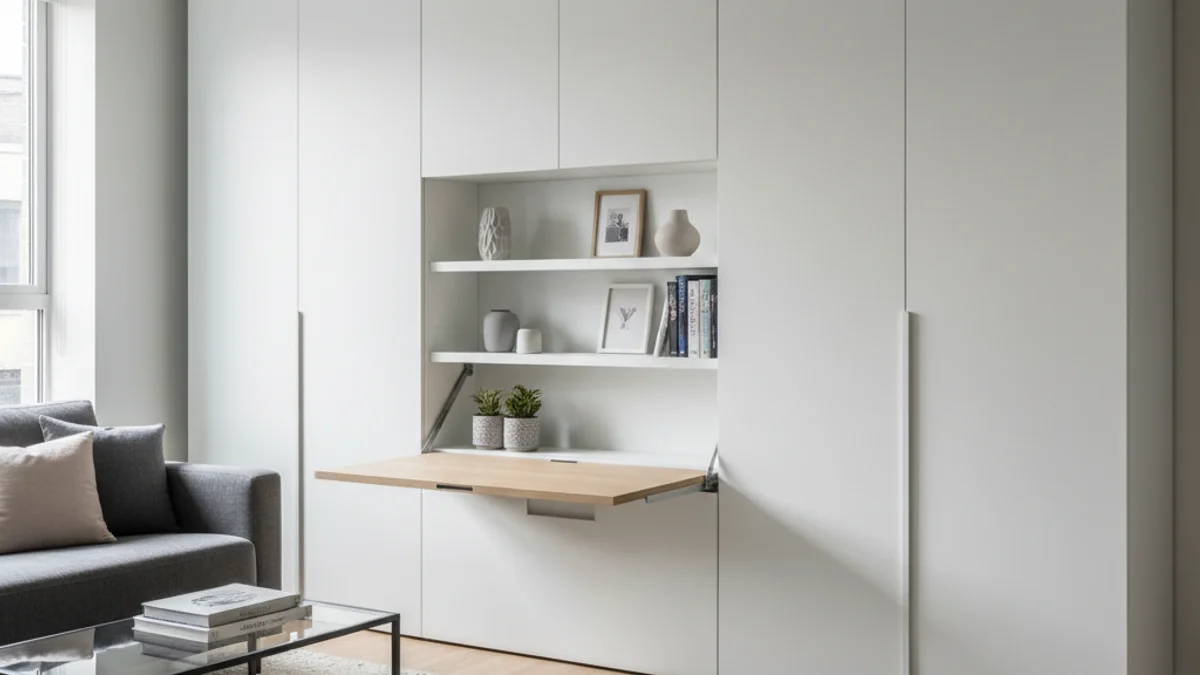
The average size of newly built homes in Spain has dropped by 23% over the last decade, standing at just 69 square meters in recent developments in key cities such as Barcelona, Sabadell, and Tarragona. This contraction, combined with record high prices, has radically transformed the furniture market.
According to data from the sector's employers' association, ANIEME, sales of folding beds have tripled between 2019 and 2024, rising from 4% to 12% of the rest equipment market. This growth reflects the citizens' need to juggle available space in increasingly smaller and more expensive homes.
Ten years ago, 80% of inquiries about folding beds came from studios or tourist apartments. Today, more than half correspond to conventional families who need to convert the dining room into a guest bedroom.
Factors such as the consolidation of teleworking (affecting 34% of workers in Spain) and the rising average age of emancipation (30.4 years) have accelerated demand. Folding beds, historically known as Murphy beds (patented by William Lawrence Murphy in 1916), have evolved from a provisional solution to a sophisticated design element.
This cultural shift, driven by millennials and Generation Z, prioritizes functionality and flexibility over permanence, eliminating the stigma associated with these creative spatial solutions.