Species inhabiting the deep ocean floor play a key role in its conservation and, by extension, in that of all abyssal biodiversity. This is the main conclusion of research co-led by the National Oceanography Centre (NOC) in the UK and the Institute of Marine Sciences (ICM-CSIC) in Barcelona. Specifically, the study demonstrates that benthic fauna, which lives in contact with the seabed, is primarily responsible for ensuring that polymetallic nodules—mineral accumulations of great value for the mining industry—remain on the surface of the seabed and do not become buried or dissolve in the abyssal mud over time.
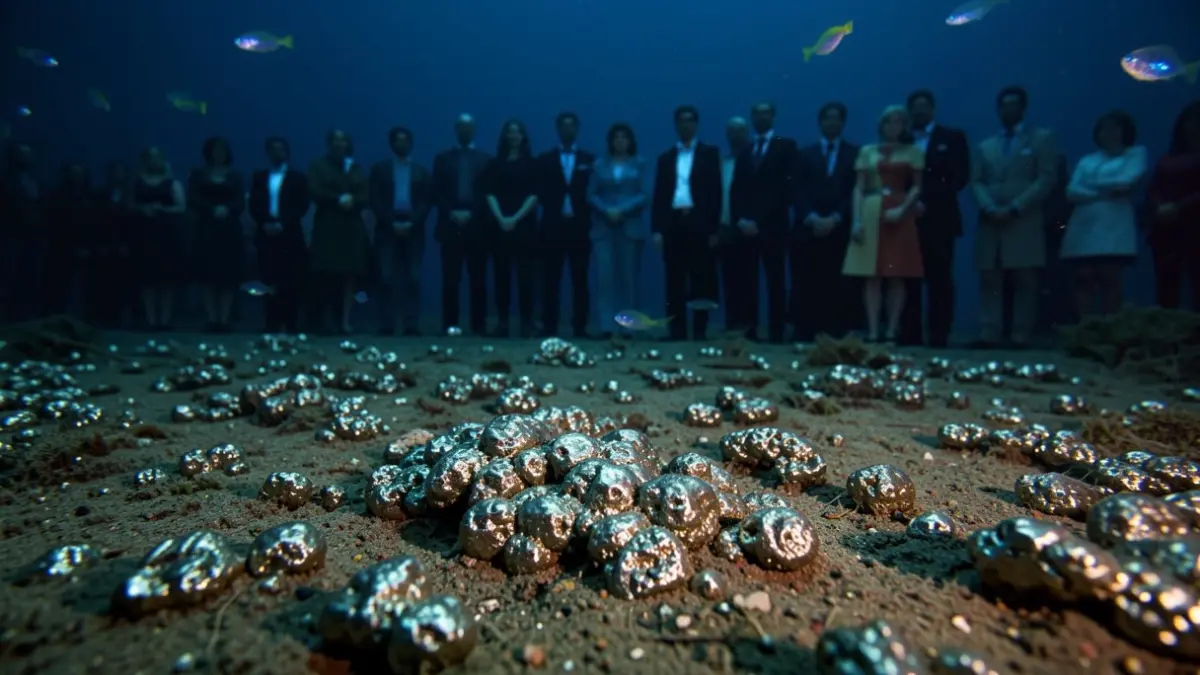
This finding not only reveals a previously unknown ecosystem function but also highlights a new and unexpected ecological impact that could exacerbate the already known consequences of deep-sea mining on a global scale. Polymetallic nodules (also known as manganese nodules) are rock concretions of variable size—generally between 1 and 20 centimeters— found scattered, but in great abundance, across the floor of some abyssal plains at depths of between 4,000 and 6,000 meters. They form very slowly over millions of years and provide an unusual but essential habitat for a wide variety of deep-sea species.
Through regular time-lapse photography of the seabed, the scientific team has documented how various mobile species actively remove sediments from the surface of the nodules. Among these animals are sea cucumbers, sea urchins, and sea snails, among others. The activity of organisms such as polychaete worms, which live within the sediments and lift nodules from below, has also been recorded. These daily activities of the benthic fauna act as a constant maintenance mechanism for the nodules, supporting a hypothesis first formulated over four decades ago.
By keeping the nodules clean and on the surface, these 'ecosystem engineers' allow other sessile species—those that cannot move—such as corals or sponges, to colonize the hard substrate, thus promoting the high biodiversity that characterizes these abyssal habitats. Therefore, the authors emphasize the need to understand not only which species inhabit deep environments but also how they interact with and modify their surroundings, especially in the current context of evaluating deep-sea mining.
According to the scientific team, if mining activities reduce or eliminate abyssal mobile fauna, this natural process of cleaning and lifting nodules will be directly interrupted. Consequently, remaining hard substrates could become buried or dissolve in the abyssal mud, eliminating the ecosystem's capacity to regenerate and support long-term biodiversity.
Deep-sea mining could trigger a cascading ecological impact that has not been considered until now. By reducing the mobile fauna of these seabeds, a functional mechanism that keeps the hard substrate exposed would be eliminated; by altering this key natural process, species like corals and sponges would find it more difficult to recolonize the environment, exacerbating the already known effects of mining on the great biodiversity of these ecosystems.
We are only just beginning to discover the hidden processes that sustain deep-sea ecosystems. Understanding these interactions is essential to predict the extent to which these ecosystems are capable of being resilient.
Overall, the results of this research open new opportunities for monitoring the ecological status, resilience, and long-term dynamics of abyssal zones. According to the authors, considering the role of species acting as ecosystem engineers will be fundamental for improving predictions on how nodule fields will respond to any human disturbance and for advancing towards an environmental management of deep waters based on solid scientific evidence.