The new Rodalies Catalunya, a mixed company between Renfe and the Generalitat, began operations this week, marking a turning point in railway management. The first major challenge for 2026 is the incorporation of 110 new high-capacity trains, manufactured mainly by Alstom, which will replace older units dating back to 1990. These trains, which are more accessible and equipped with the ERMTS system, are expected to improve network reliability.
“"the changes will not be immediate"
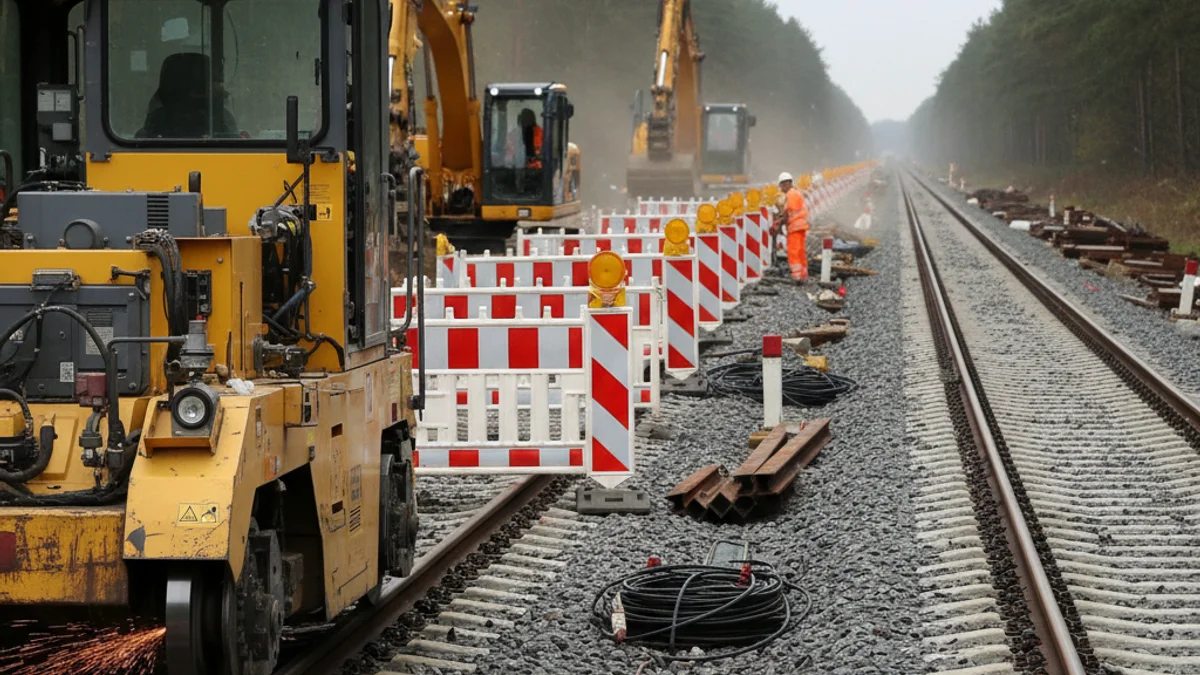
The doubling works on the R3 line, the only one still operating on a single track in Catalonia, will continue throughout 2026 between Parets del Vallès and La Garriga. The total closure will last 16 months. A key date is May, when work at Montcada Bifurcació is scheduled to finish and the second phase of the R3 closure (between Mollet Santa Rosa and La Garriga) will begin. Due to these works, the R7 line will also not run between Barcelona - Fabra i Puig and Cerdanyola Universitat until May 2026.
Undergrounding projects continue for the R2 line in Montcada, with a budget exceeding 500 million euros, and for the R4 line in Sant Feliu de Llobregat, where over 80% of the track is already buried. Another major pending challenge is the partial closure of the R2 Sud for maintenance of the Garraf tunnels, which requires the prior completion of rail renewal works on the R4 in Martorell, scheduled for March.
The major stations of Sants and La Sagrera will remain under construction. At Sants, the transformation will last until at least 2030, while at La Sagrera, some technical parking areas are expected to become operational in 2026. Regarding FGC, the main milestone is the launch of the R-Aeroport shuttle train to El Prat airport by the end of 2026 or early 2027, in addition to taking over the Rodalies de Lleida lines (RL3 and RL4).