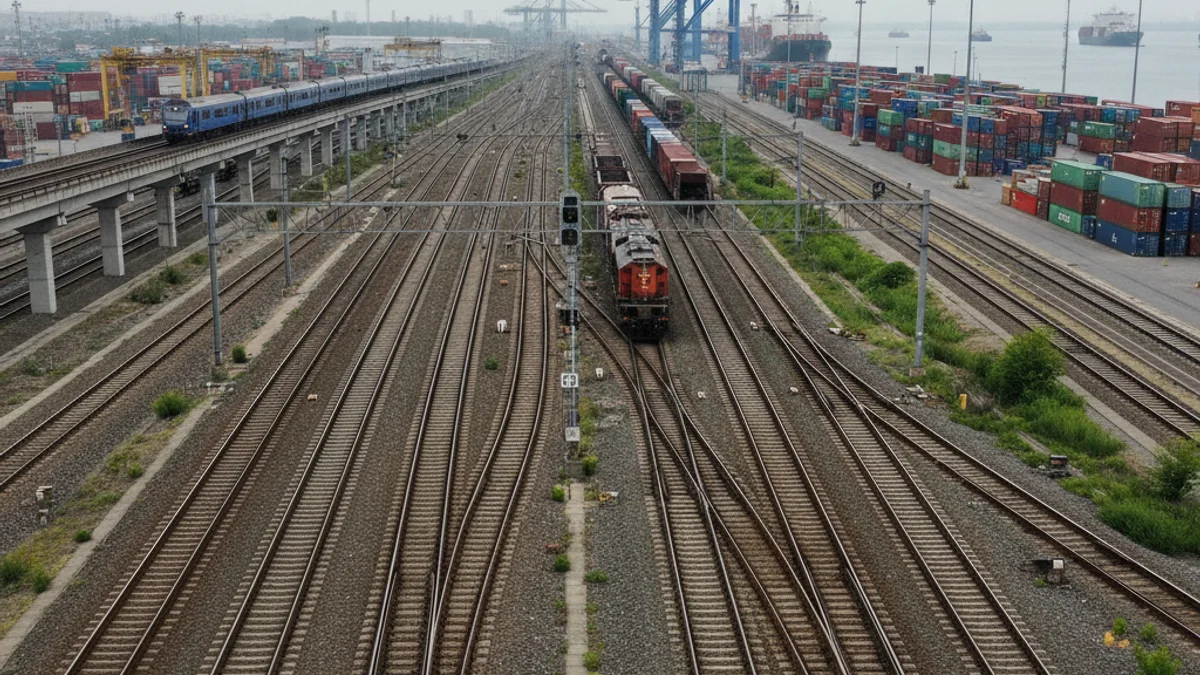
The logistics sector advocates for duplicating railway tracks so that freight trains do not have to use the same infrastructure as the Rodalies (commuter) lines. This shared use occurs across almost the entire network, except for the stretch connecting Castellbisbal to the Port of Barcelona. Joan Amorós, president of Ferrmed, described the situation as “serious” because the network cannot absorb more trains.
“"New rail lines and intermodal points must be planned."
This congestion becomes critical when incidents occur. The accident in Gelida and the closure of the Rubí tunnel have left the Port of Barcelona in a state of “technical isolation for rail freight,” according to the Association of Spanish Shippers (ACE). The entity warns that the volume of accumulated merchandise is very high, as the port handles about 4,000 full containers weekly.
The lack of infrastructure investment generates a “serious conflict” leading to product price increases and loss of competitiveness, according to Coll. This situation forces companies to switch to road transport, further saturating the highways. The ACE points out that the “rail blockade forces alternatives on an already saturated road, compromising delivery times.”
Amorós believes the current system is a “poor management approach” that prevents rail transport from being competitive against trucks. A Ferrmed study indicates that an integrated freight system (road and rail) would save 51% of operational transport costs and reduce greenhouse gases by 77%.