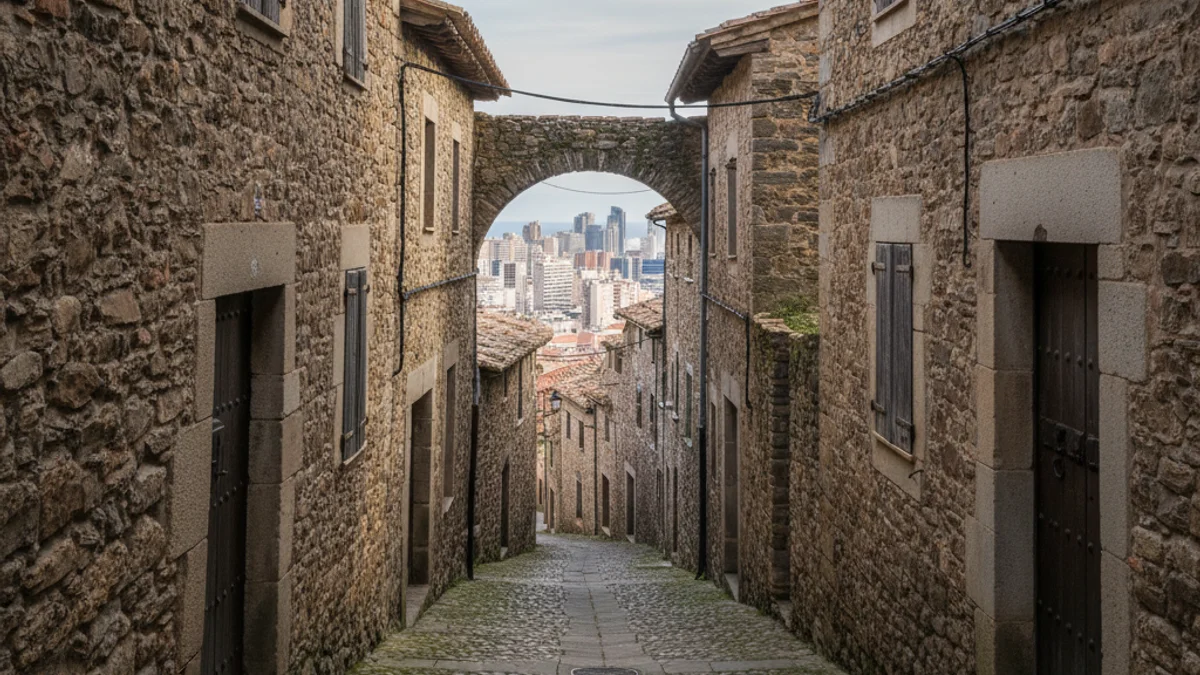
The case of Sant Jaume de Frontanyà (Berguedà) is the most extreme example: the smallest town in Catalonia with only 25 inhabitants, where no child has been born in six years. The former agricultural and livestock life has vanished, along with key businesses like Ca l'Eloi and the inn Cal Marxandó, closed due to retirement and lack of generational replacement.
To reverse this situation, the Town Council has launched a project with the Bishopric of Solsona to renovate the old rectory and open a municipal concession restaurant. This work, which aims to attract a young family, costs 300,000 euros, exceeding the municipality's annual budget.
At the other extreme, Calafell (Baix Penedès) has doubled its population since 2001, rising from 13,503 to 32,429 inhabitants, with a real estimate of 50,000 unregistered residents. This boom, driven by the pandemic and the expulsion from the Barcelona area due to housing prices, strains public services.
“"It is not a call for more people to come, it is to ask those who already live here to register, because life is good in Calafell, but we want life to be better."
This imbalance is reflected in the data: while cities over 50,000 inhabitants grew by 1.6% in one year, towns under 500 inhabitants lost 0.1% of their population. Rural Catalonia faces the triple challenge of economic diversification, extension of services (such as improving mobile connectivity and education), and the right to housing.
To address this, the Parliament approved the Catalan Rural Statute Law, benefiting 608 town councils. Starting in 2026, tax deductions of 750 euros will apply to young people and families who settle there, along with direct aid for purchasing or renovating homes, seeking to reverse the trend of population concentration.