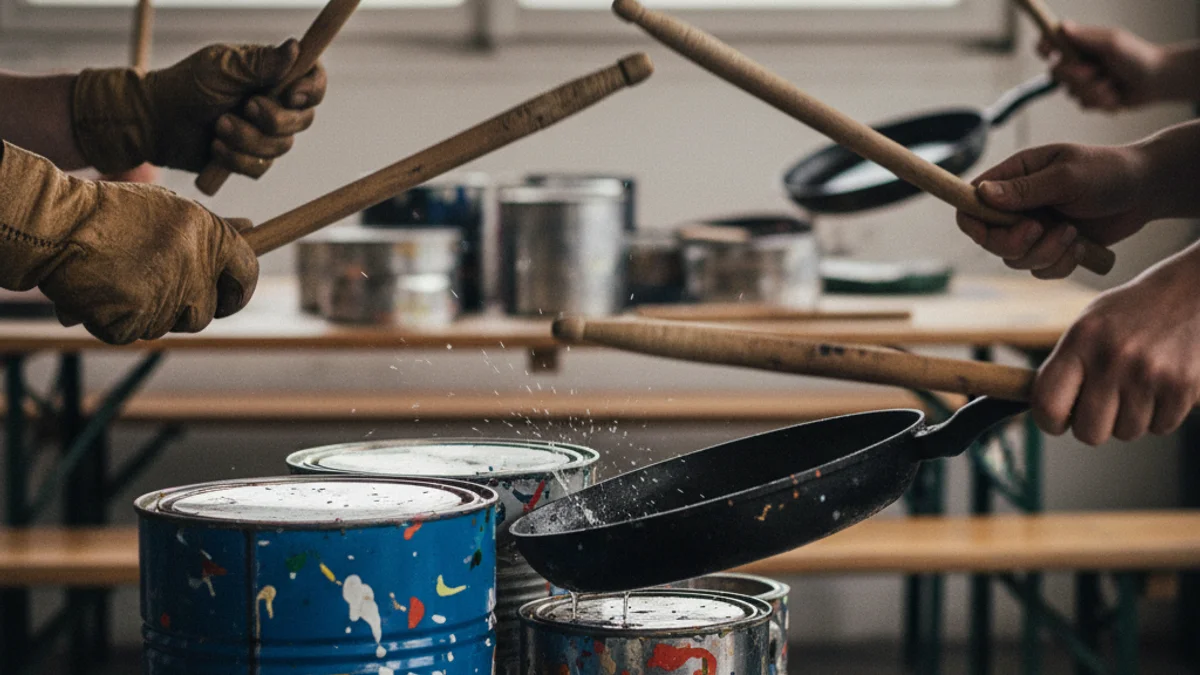
The non-academic sound of the batucada at the Valldaura therapeutic school in Olvan emerges from frying pans, plates, and paint cans, converted into instruments by twenty young people facing addiction and mental health issues. This weekly activity becomes a key space for expression, teamwork, and personal reconstruction for the participants.
“"I have a great time and it helps me escape and disconnect from everything."
The unique aspect of the workshop, managed by Amalgama7, is that all instruments are made from recycled material, facilitating participation and rhythm discovery. One participant, aged 16, highlighted the initial surprise of playing with kitchen utensils but stressed that coordination generates an excellent sound and strengthens bonds with peers.
Marta Pagerols, the batucada teacher, guides the young people with an inclusive approach, focusing on listening and visual contact to harmonize different rhythms. To facilitate learning, rhythms are associated with phrases proposed by the participants themselves, such as “dame una patata” or “pica carxofa, Ramon”.
Batucada is integrated into the overall Valldaura project, which supports supervised boys and girls aged 14 to 18 dealing with addictions (drugs, screens, gambling) and mental health problems. Mònica Pagerols, the socioeducational coordinator, explains that the center works on three pillars: clinical, academic, and socioeducational, seeking social integration through activities like going to the CEEC Berga gym or playing padel at Cal Bassacs.