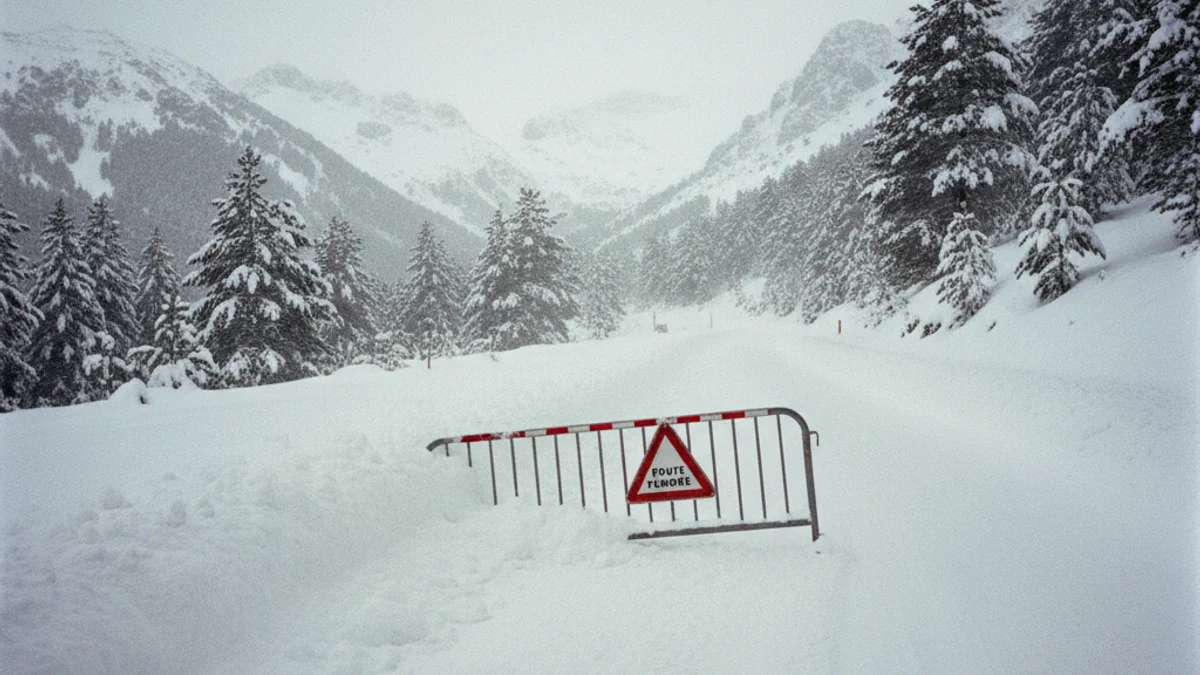
Observatories of the Servei Meteorològic de Catalunya recorded the most significant snowfalls of the day in the High Pyrenees, with accumulations exceeding half a meter of new snow. Noteworthy figures include 56 centimeters collected at Certascan and 51 centimeters at the Cerdanya refuge of Malniu. Other locations with significant depths include Bonabé (49 cm), Núria (39 cm), and Sasseuva (35 cm).
This heavy snowfall has caused a considerable increase in the risk of avalanches in the mountains. The danger has risen to a strong level (4 out of 5) in the Val d'Aran and the north of Pallars Sobirà. The risk is marked (level 3 out of 5) on the slopes of Perafita-Puigpedrós (north of Alt Urgell and Cerdanya), Ter-Freser (Ripollès), and other areas of Pallars Sobirà.
Regarding road disruptions, the Servei Català de Trànsit reported the provisional closure of several mountain passes due to avalanche risk, including the Bonaigua pass, the Coll de la Creueta (BV-4031), and the access to Coll de Pal (BV-4024). Furthermore, the use of snow chains remains mandatory on the C-28 near Bonaigua and the C-142b in Naut Aran.
In some of the main towns of the High Pyrenees, fresh snow records were 25 cm in Esterri d'Àneu, 23 cm in Vielha, and 18 cm in Puigcerdà. Snow also fell more lightly in municipalities such as La Seu d'Urgell, Planoles, Das, and Sort. Authorities recommend avoiding mountain activities outside ski resorts in areas with avalanche risks of level 3 or 4.