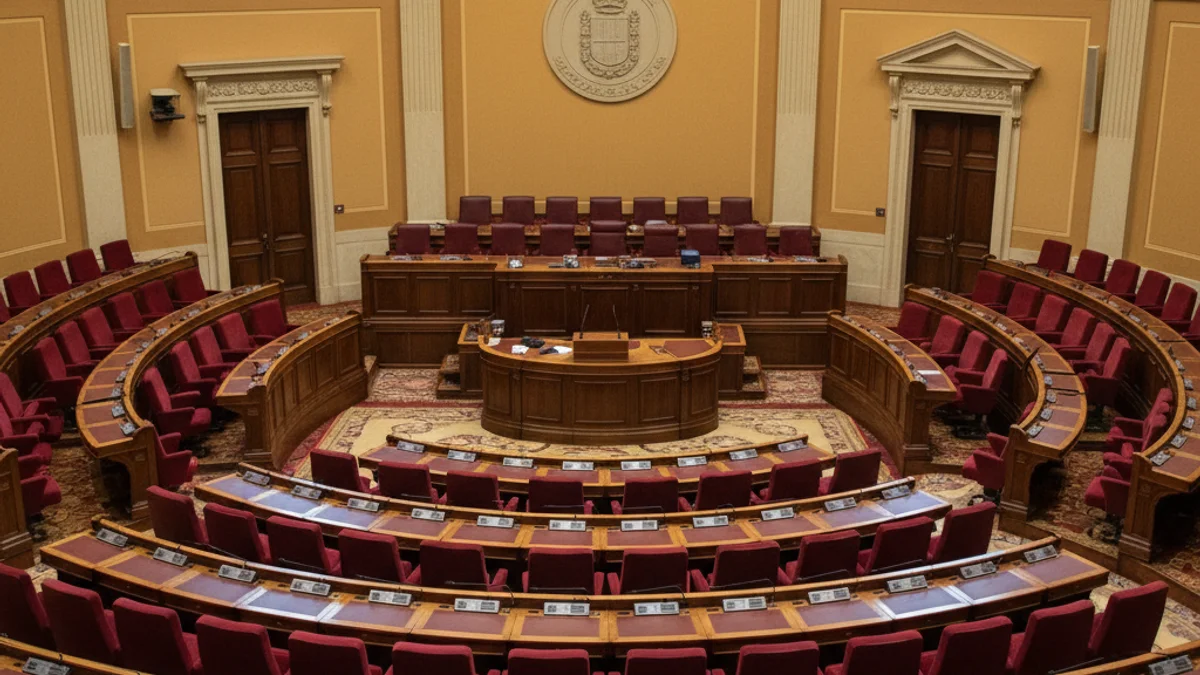
This demographic increase, mainly driven by the arrival of the foreign population, modifies the social structure and conditions the agenda of the Government. Despite this, experts rule out that representation is insufficient in quantitative terms, comparing it with other major European parliaments.
“"According to comparative logic, it is not necessary to increase the seats. We are well represented if we look at other major parliaments in the world."
The main issue, according to political scientists, is not the total volume but the territorial architecture. The current distribution, set more than four decades ago, causes a major imbalance: a deputy in provinces like Lleida costs less than half that in Barcelona, altering proportionality.
Increasing the number of deputies is considered politically unviable due to strong citizen disaffection and institutional cost. The underlying problem is that Catalonia is the only autonomous community lacking its own electoral law, the tool that would allow the distribution of seats to be modified.
The figure of 135 parliamentarians comes from a transitional provision of the Statute of 1979, resulting from a political pact conditioned by the weight of Convergència i Unió (CiU), which was able to block any subsequent reform that altered the territorial balance, a situation that remains today.