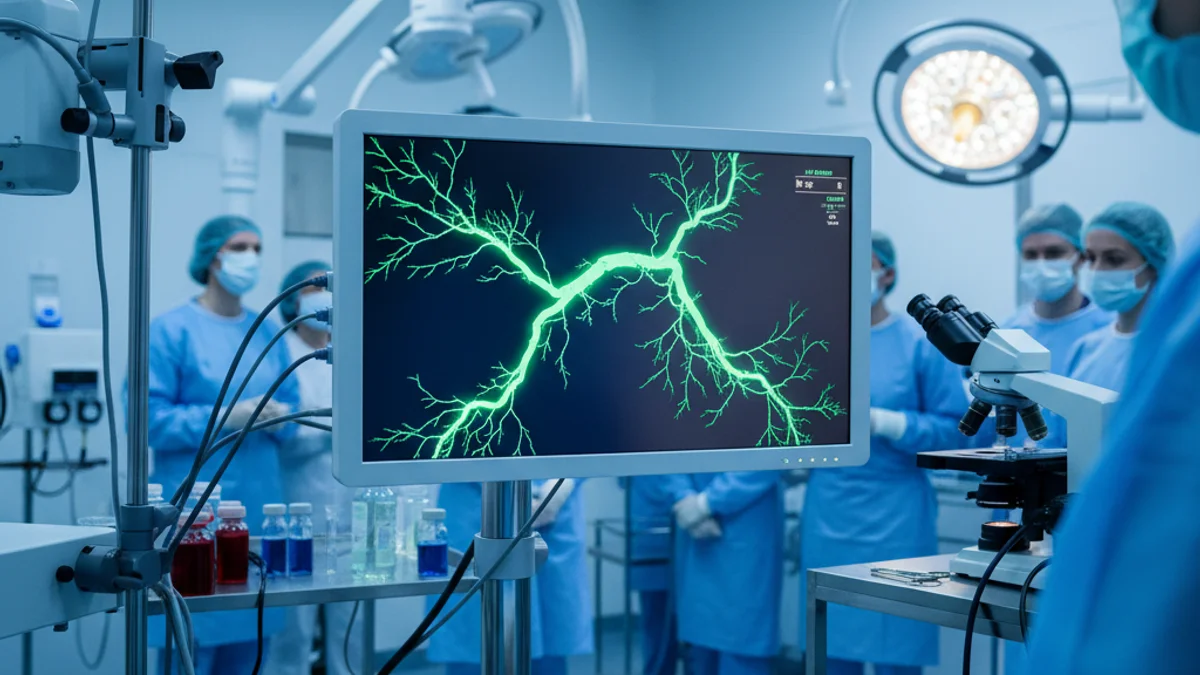
This new methodology focuses on locating the sentinel node. Unlike the conventional system that uses Technetium-99, the fluorescence technique eliminates the need for Nuclear Medicine services, simplifying the surgical process.
The Breast Pathology Unit has already successfully tested the method on 200 patients, achieving a 97% accuracy rate. This allows the procedure to be performed entirely during surgery while the patient is under anesthesia.
“"The results obtained so far reinforce the solidity of this alternative and open the door to a possible paradigm shift in sentinel node detection in our country."
The trial, which began in 2021, involves 37 centers worldwide. Since it is radiation-free, it is a safe option for pregnant or breastfeeding women.