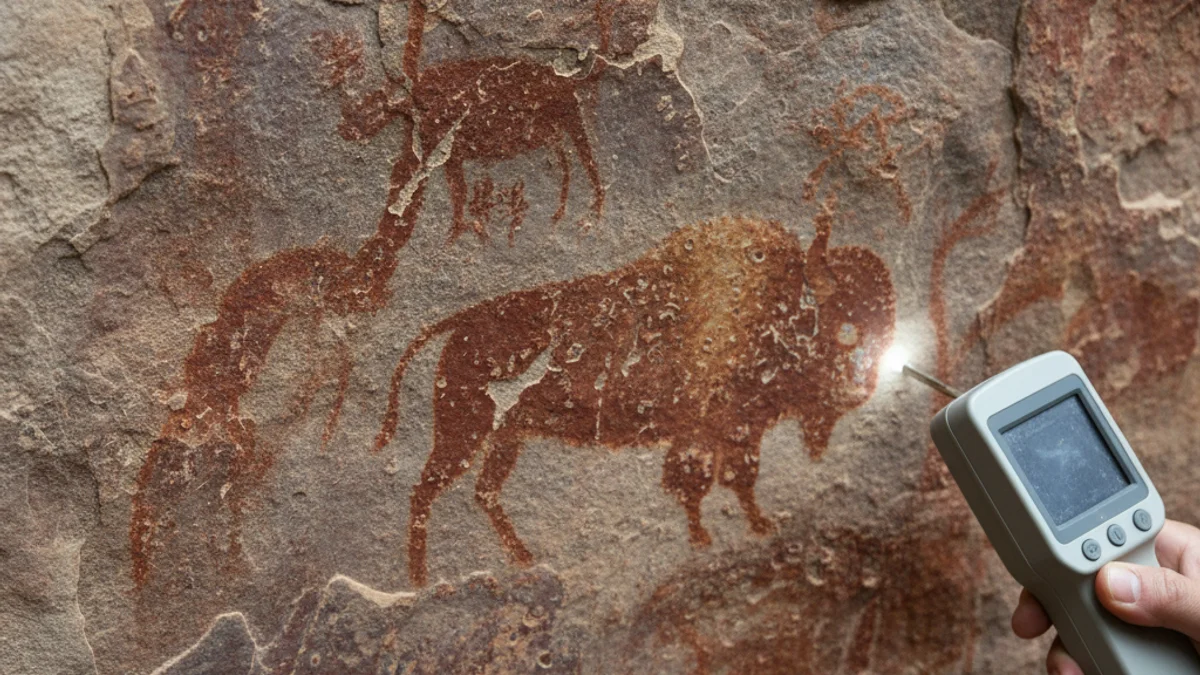
The pioneering study was conducted in situ at the site, applying a methodology that combines the use of a smartphone with a portable X-ray device to obtain precise data without damaging the ancient artwork.
This analysis allowed experts to determine the composition of the red pigment used by prehistoric inhabitants. The results show a direct link between the chemical composition and the different stages of Mediterranean arc rock art.
The findings of this research have been published in two internationally renowned scientific journals: the Journal or Archaeological Science Reports and the Journal of Cultural Heritage, highlighting the significance of the non-invasive methodology employed.