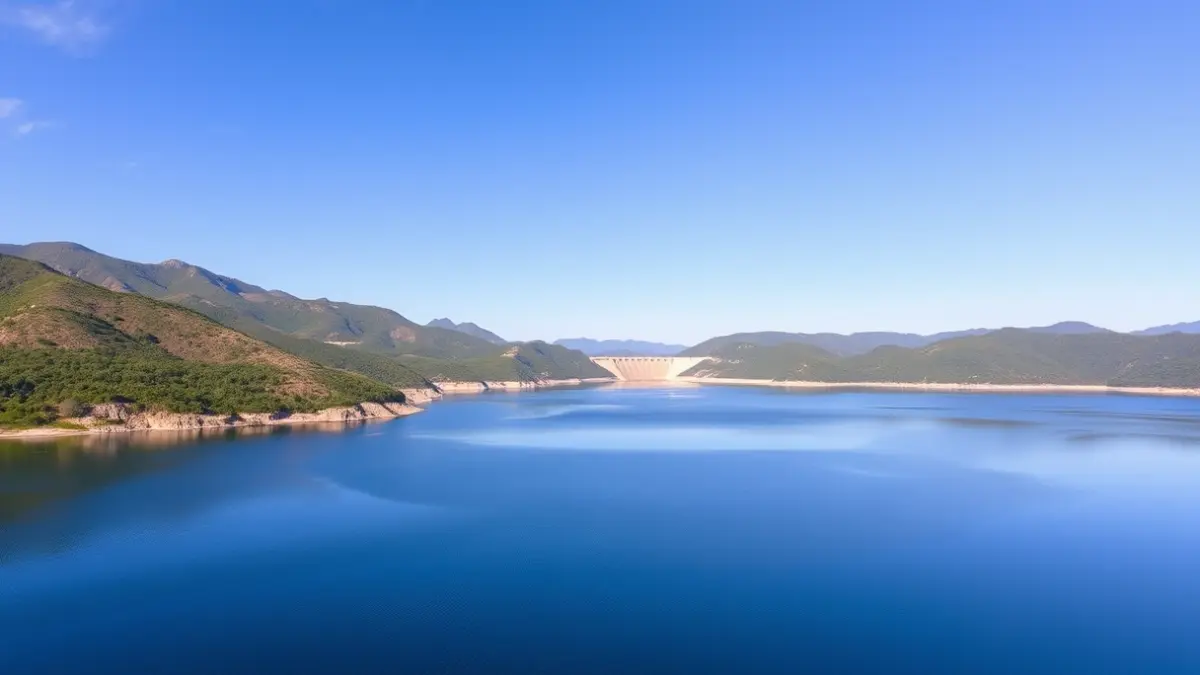
After a prolonged period of drought, water reserves in Catalonia have experienced a remarkable recovery. The rainfall over the past few months has allowed the reservoirs to maintain very high levels, placing the internal basins significantly above the 60% threshold that marks the onset of drought scenarios.
This situation represents a change in trend compared to the most critical moments experienced in 2024, bringing current records closer to the usual levels prior to the water crisis. The ACA updates this data daily, offering a detailed overview of the evolution of each reservoir.
The Ter-Llobregat system, fundamental for supplying a large part of the Barcelona and Girona demarcations, as well as Solsonès, also shows very high reserves, around 93.6%. This system includes reservoirs such as Sau, Susqueda, La Baells, La Llosa del Cavall, and Sant Ponç.
Among the internal basin reservoirs, high levels stand out in Riudecanyes (99.50%), Foix (80.48%), Sant Ponç (95.79%), and Siurana (77.66%). La Llosa del Cavall even exceeds 100% of its capacity, demonstrating the extent of the water reserve recovery.