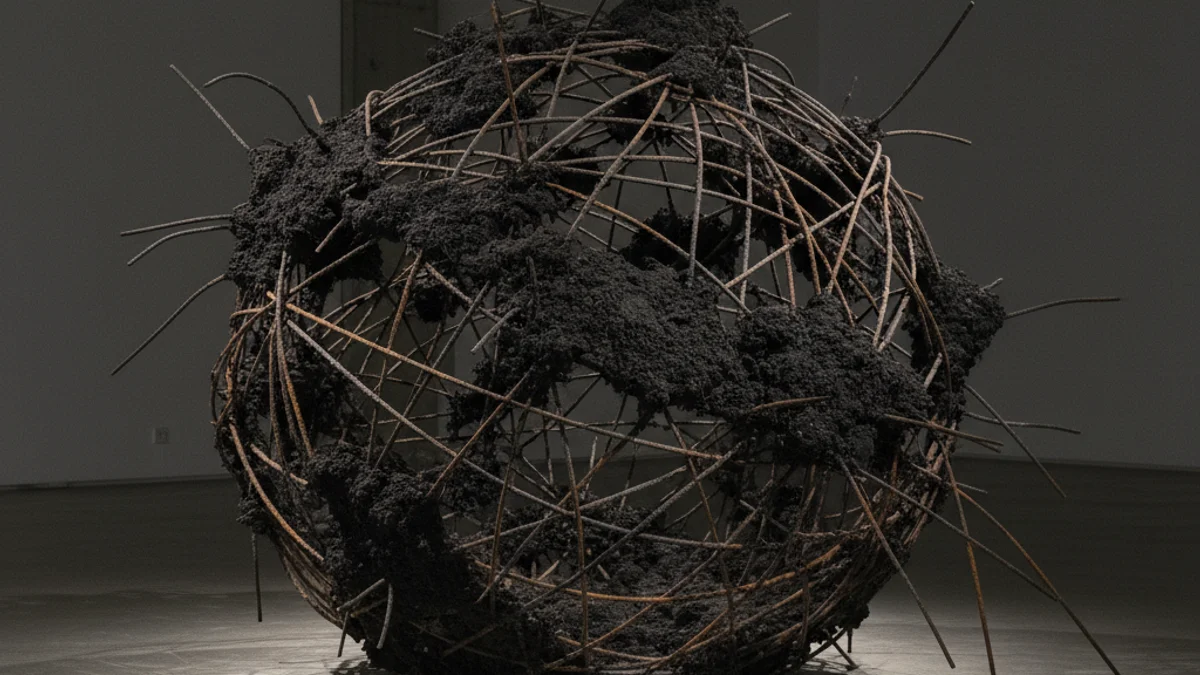
The piece, named after a tractor brand, was conceived by Enguany as a symbolic portrait of the peasantry in Camp de Tarragona. The artist, originally from Reus but residing in Constantí, mounted the large iron wire structure on a carpet of fertile soil extracted from his own farm.
“"Based on an old tractor I had on the farm, Fordson establishes a connection between two worlds, the rural and the modern, which coexist in the same environment."
The work evokes traditional shapes and tools, functioning as a “totem” that invades the space and accumulates layers of material and memory. Enguany, who usually works outdoors, explains that this physical connection to the land causes the installation to break the conventional exhibition space.
The artist invites the viewer to contemplate Fordson from a zenithal position, taking advantage of the small raised seating area of the Casino theater. Through a play of low-intensity lights, the gaze is naturally focused on the structure, allowing elements reminiscent of the solar cycle to be distinguished.
“"Fordson is a project of accompaniment and, above all, recognition, to the rural world, the peasantry, and their ancestral practices."
The exhibition, which the author considers one of the most important pieces he has created to date after dedicating himself exclusively to painting, offers free admission. This week, Enguany will also offer guided tours for students from high schools and the Tarragona School of Art and Design.