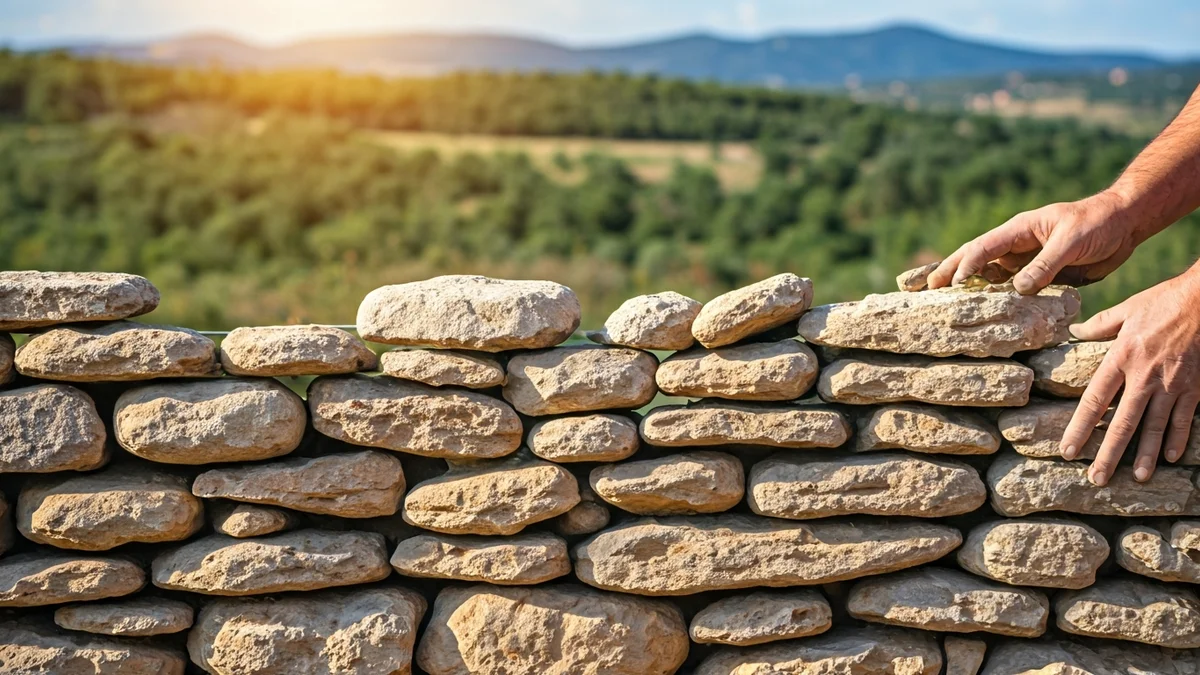
Martí, representing the fourth generation of a construction family and originally from El Pont d'Armentera, highlighted the high demand and the need to recover dry stone heritage in the Ponent region. According to him, this technique, learned from his father, has seen a notable resurgence in the last five years.
“"My father taught me the dry stone technique because it was one of the services we offered in the company. In the last five years, there has been a very high demand and a huge heritage need in Ponent."
The master builder has observed a
very beautiful current of belonging
in the province of Lleida, where people value and wish to preserve popular architecture. He emphasized that dry stone
sustains the country
especially in areas like the Vall del Corb, where dry stone walls are crucial for agriculture and to prevent the land from becoming a stony wasteland.
Martí mentioned key figures in the recovery of this heritage, such as Jordi Giribet in Tàrrega and Mateu Esquerda in Granyena de les Garrigues, as well as associations like the Amics de l’Arquitectura Popular. He also highlighted his project #RecuperemelMeüll in Pallars Jussà, which has involved over 200 people in three years.
The second workshops in Ciutadilla, held last Saturday and Sunday, saw fifteen participants learn and practice the technique by restoring a dry stone wall at one of the village entrances. Jordi Sanfeliu, one of the organizers, stressed the ease and rewarding nature of this technique.
“"Dry stone is the most sustainable construction technique that exists. With the stone the land gives you, you can build stone upon stone without any type of mortar. There is nothing more 'kilometer zero' than this."