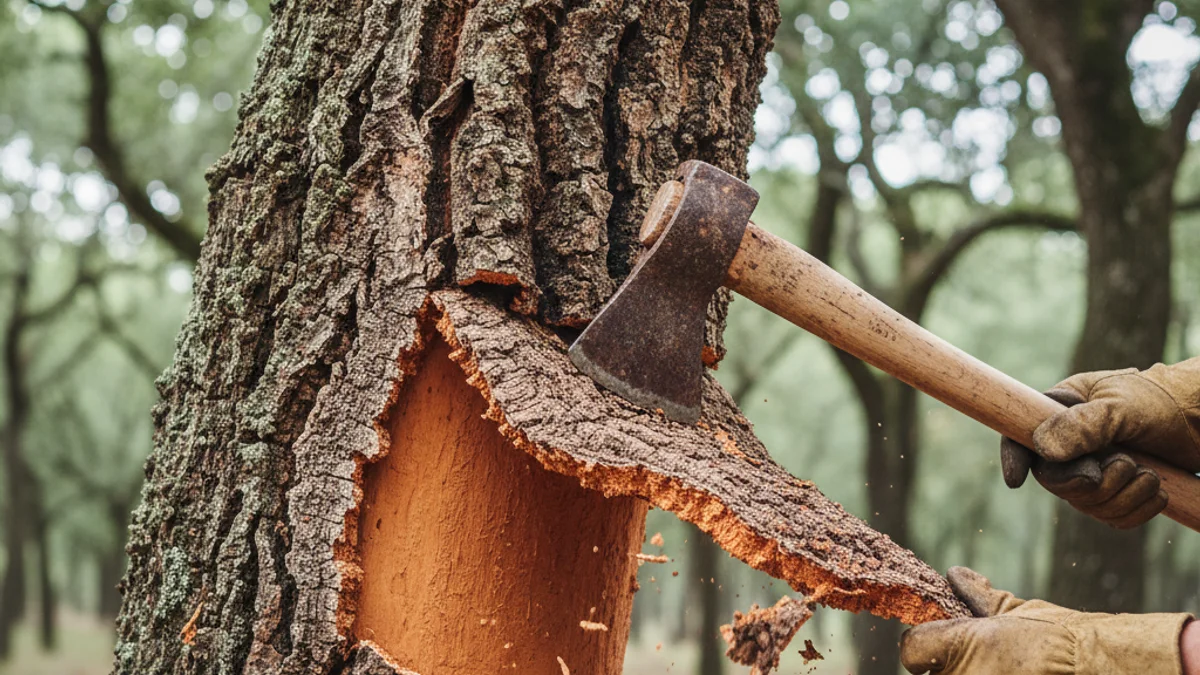
The seasonal trade of cork stripping is one of the few forestry jobs still alive on the southern slope of the Alt Empordà forests. The Cantallops crew is notable for its composition: unlike other brigades formed by external workers (such as those from Andalusia or Morocco), its members are residents of Cantallops and nearby towns like Maçanet de Cabrenys, Agullana, or Vilabertran.
“"We want to maintain a tradition by working the same way people did before: taking care of the trees, without harming them, and maintaining a good relationship with the owners, based on trust."
Miquel Brugués, who started over twenty years ago as a student, now leads a crew of about ten members, mostly young people in their twenties and thirties. For them, cork harvesting is a complementary activity they combine with other professions such as gardener, firefighter, or farmer.
Cork production in the Salines area has been severely affected by climate change and drought. The lack of rain has reduced production by a quarter, dropping from the 2,000 daily kilos previously achieved to the current 1,500 kilos. This situation highlights the physical difficulty of the work and the need for conscious forest management.
“"We are the cork resistance."