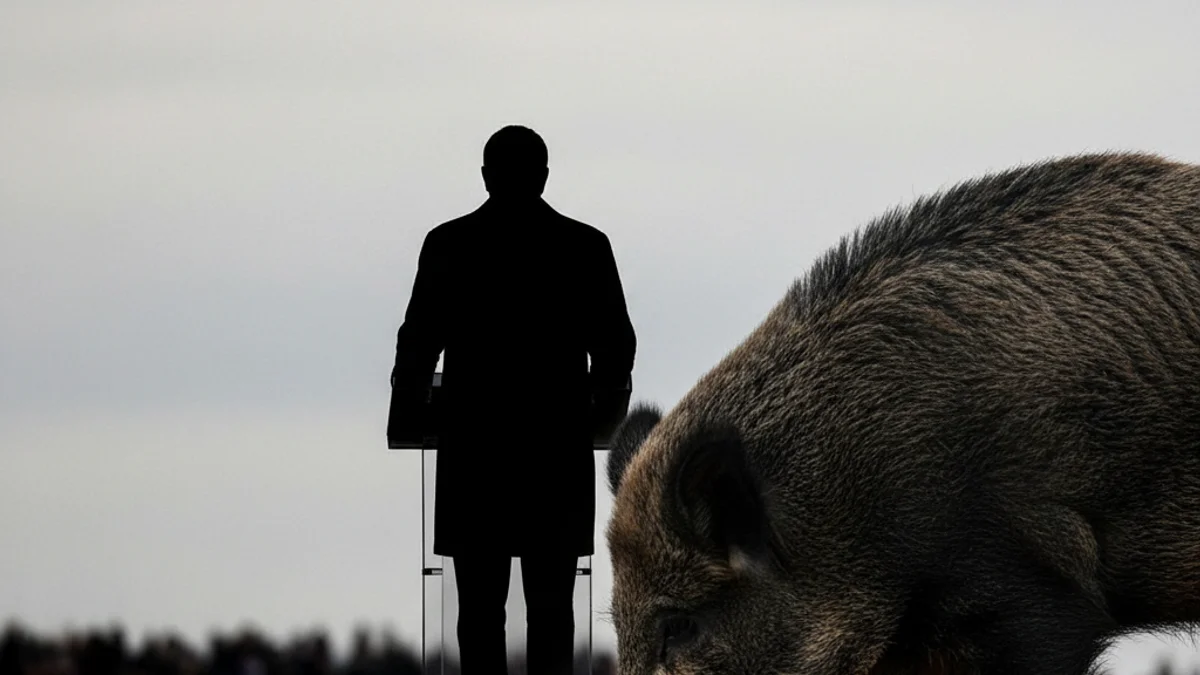
The text begins by questioning the breach of international norms, pointing out that, despite economic interests, there is always an individual who decides and assumes responsibility. This initial reflection serves as a starting point for a deeper analysis of human behavior.
A distinction is made between ecology (the study of the relationships of living beings with the environment, from the Greek oikos: house and logos: study) and ethology (the study of animal behavior, ethos: conduct and ethics), establishing a conceptual bridge between respect and ethics.
To be a histrionic and narcissistic person, one must first be egocentric, which means that the world begins and ends in oneself, without taking others into consideration.
The article uses genetics to illustrate the difference in conduct, noting that humans share 98% of genes with the domestic pig, but only 84% with the wild boar (porcus singularis). This 14% difference is associated with more predatory, solitary behavior, indifferent to collateral damage.
The implicit conclusion is that the conduct of the solitary individual, who only seeks their own survival without territorial limits and with 'good tusks to bite', is analogous to that of political leaders who act in a histrionic and narcissistic manner.