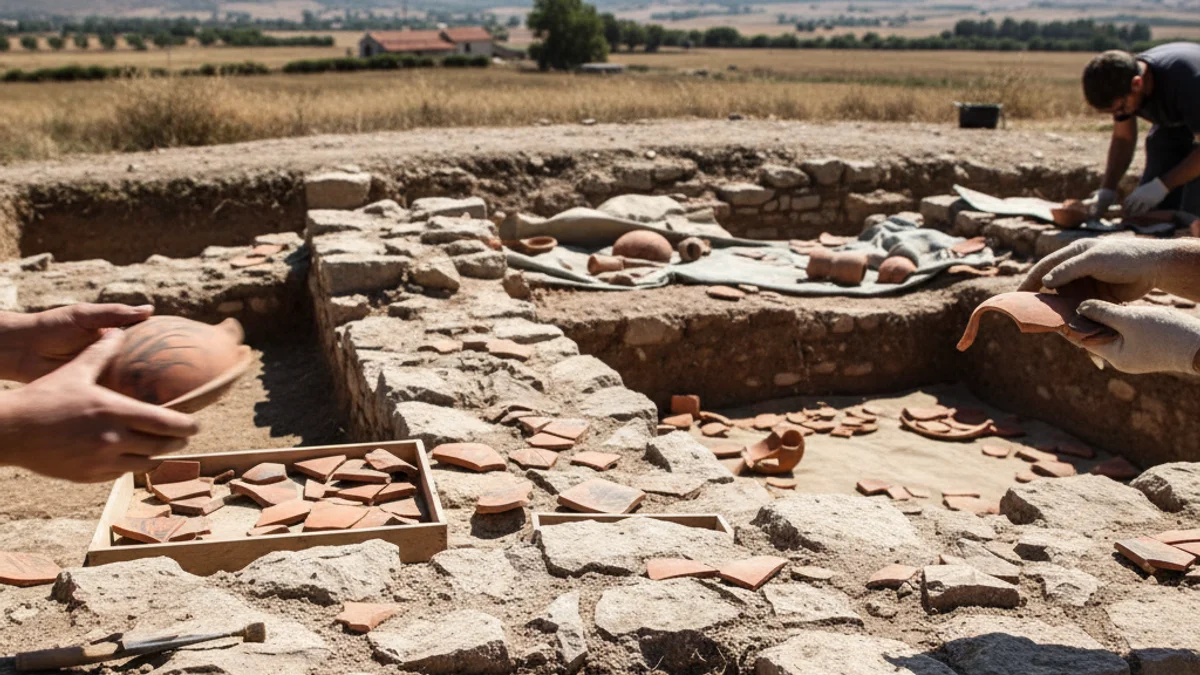
Archaeologist Òscar Trullàs, in charge of the initial intervention, highlighted the high potential of the finding, which occurred fortuitously in the summer of 2024 when a neighbor reported the discovery of a wall and ceramics. The first excavations, carried out in December 2024 and last November, revealed that the main wall is about 20 meters long and that the structure continues to expand.
The presence of fragments of luxury tableware ceramics and large storage vessels suggests that the villa was not only a production center (possibly for wine and oil) but also the residence of a wealthy family with high economic and social standing in Bages. Trullàs suggests it might have been a house owned by an important person used for summer stays or weekends.
“"We know it is the most important in the municipality and, surely, in the region."
One hypothesis being considered is that the villa's owner was a retired military officer from Rome, given that tombstones and an altar from the era referring to land-owning families have been found at the nearby Castell d’Artés. These findings suggest that Artés may have been an important administrative center for local wine production.
The Artés Town Council, led by Mayor Enric Forcada, is enthusiastic about continuing the project. Future campaigns are currently being planned, and the municipality is actively seeking grants to fund further excavations aimed at understanding the full extent and function of the site.