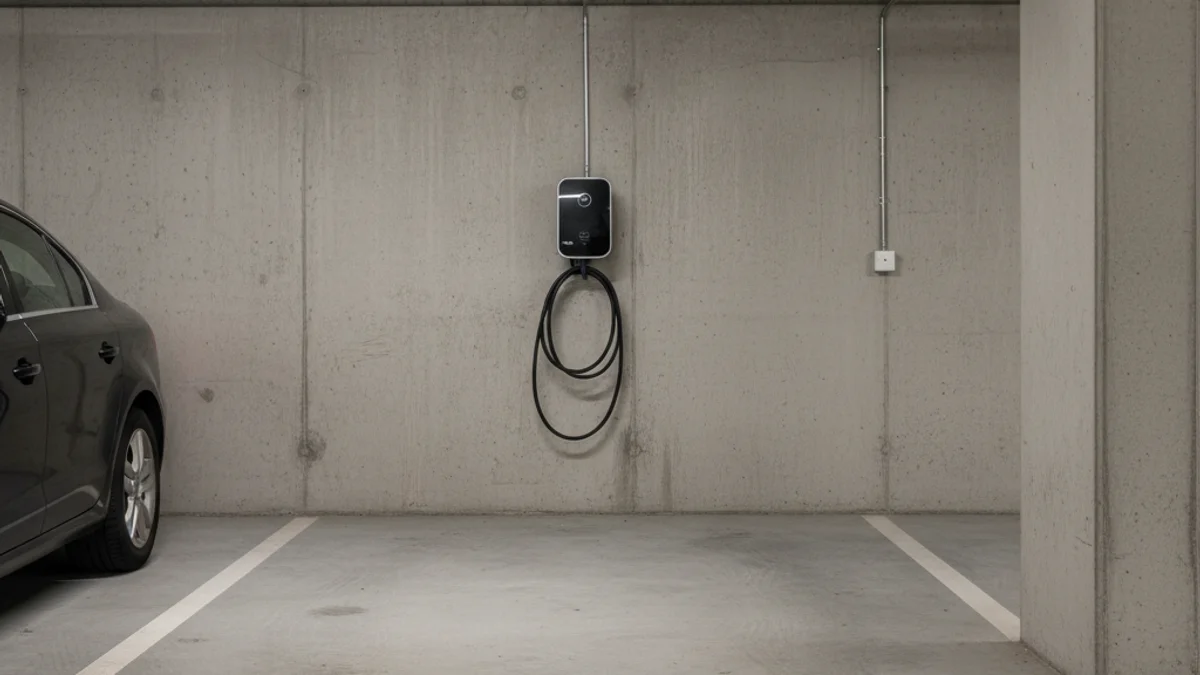
The rise of the electric vehicle has multiplied charging stations and created new legal dilemmas in owners' associations regarding whether authorization from the Owners' Association is necessary for private installations.
The installation of an electric vehicle charging point for private use in the building's parking lot, provided it is located in an individual garage space, only requires prior notification to the community.
This legal interpretation is based on the Horizontal Property Law (LPH), which in article 17.5 clearly establishes that the only requirement is prior communication. Furthermore, the rule emphasizes that the total cost of the installation and the associated electricity consumption must be fully borne by the interested party.
Recently, the Supreme Court reinforced this doctrine by ruling in favor of an owner who installed a charger in their parking space without requesting prior community consent, noting that consent is not necessary when the installation is carried out in a private use area.
To comply with the procedures, the interested party must communicate the work in advance and provide a detailed technical report and documentation related to the applicable regulations. The community cannot demand the removal of the charging point if all legal and technical requirements have been met.