The Councillor for Environment, Sustainability, and Public Roads, Daniel Rubio, highlighted that the project, largely financed by European funds, has been key to promoting a strategic line of the municipal government. He stressed that the aid allowed them to “accelerate” planning that would otherwise have been much more difficult to carry out.
“"The RENATUReus has served to give impetus to a strategic line of the city government, such as re-naturalization, both of the urban and peri-urban or peri-natural fabric."
Among the most notable actions are the creation of the Pedret ponds, near Aigüesverds, designed to promote biodiversity and the observation of native fauna. Furthermore, climate refuges have been implemented in the courtyards of four educational centers: the General Prim, Teresa Miquel, Pompeu Fabra, and Marià Fortuny schools.
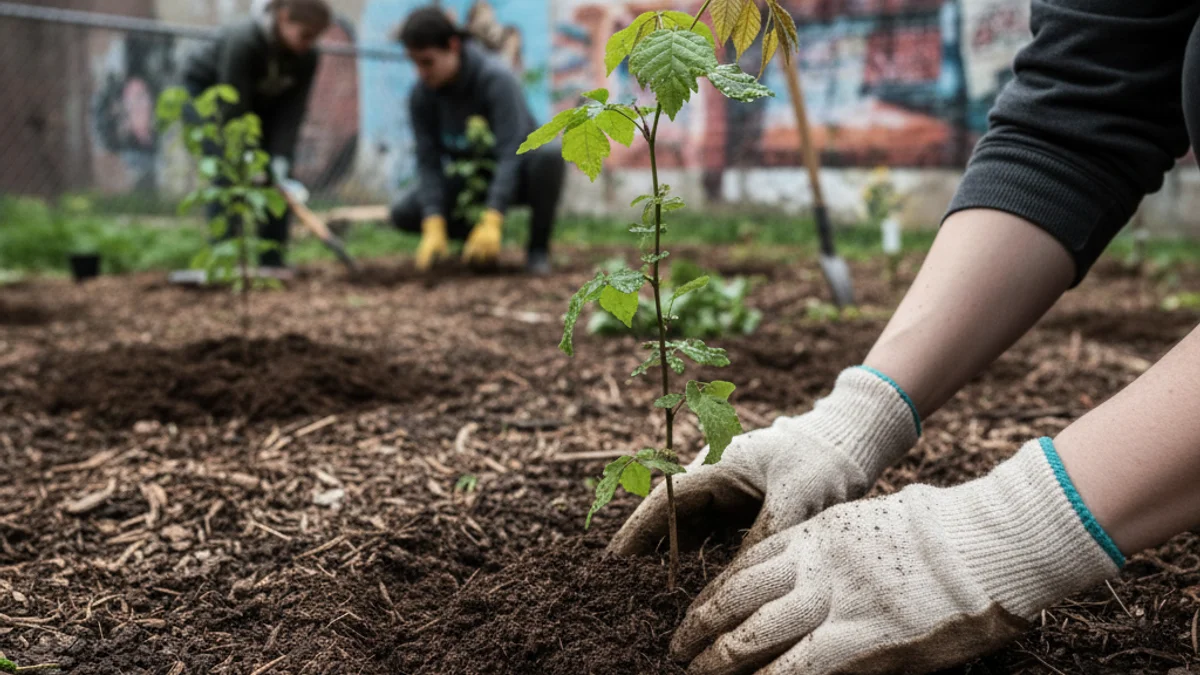
Other parts of the city have seen transformations, such as the roundabout on Riudoms avenue, converted into the first sustainable urban drainage system (SUDS), complemented by the rain gardens of the Parc del Lliscament. New community urban gardens have also been established on Astorga street, and living tree pits have been implemented in Doctor Sabater square and Sant Pancraç street.
Looking ahead, Rubio assured that the re-naturalization work will continue, as the projects will have their continuity. The Reus City Council will remain attentive to new calls for supramunicipal funding, such as a possible RENATUR 2.0 from the Fundación Biodiversidad, to continue developing projects in the pipeline.