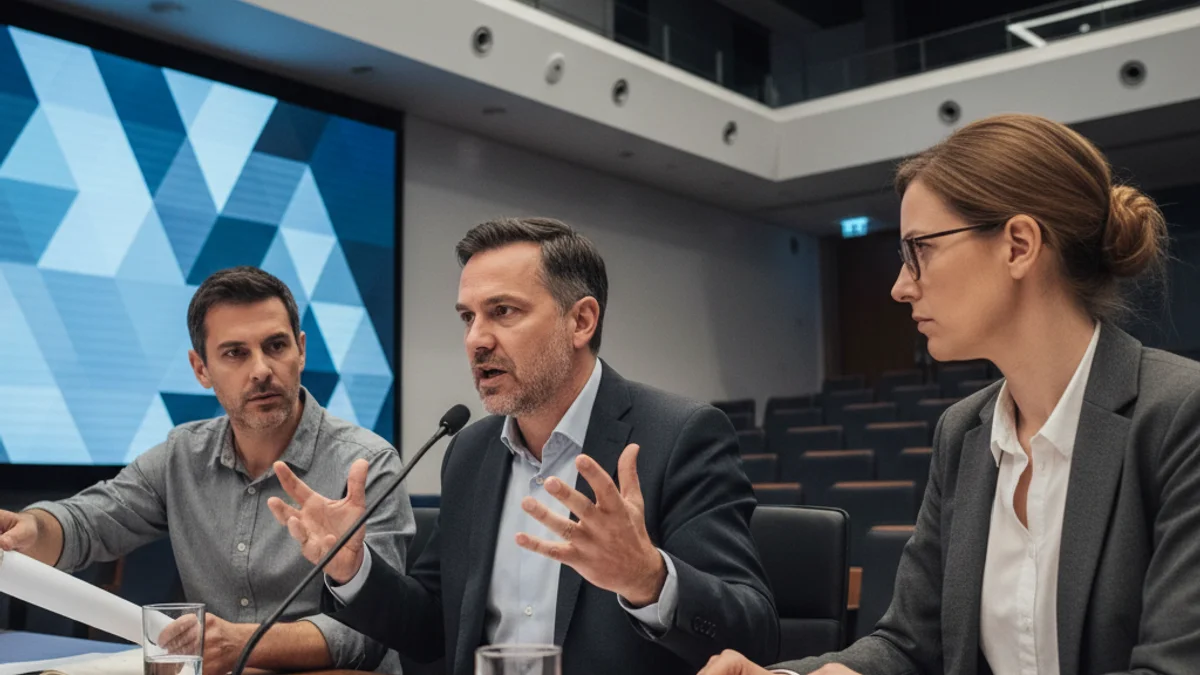
The demand was made during a La Vanguardia Encounters roundtable held at La Farga, where the challenges facing Catalonia's second-largest city were discussed. Quirós stressed that despite major future health projects like the Granvia biocluster and the new Clínic hospital, improving primary and specialized care is an immediate necessity.
“"It makes no sense that an area like Samontà, with 140,000 residents, has to travel to Sant Joan Despí despite having large hospitals in the city. Our elderly are going to die at Moisès Broggi."
Quirós's demand aligns with a historical claim for L'Hospitalet to be considered an integral health area, a pact already announced with the Generalitat. The manager of Bellvitge hospital, Cristina Capdevila, participated in the meeting and viewed the possibility of serving more population as an opportunity for research, highlighting the importance of the biocluster.
The mayor also addressed urban planning and the regeneration of the Samontà neighborhood, one of the most densely populated areas in Europe, with a planned investment of 350 million euros over a decade. Quirós emphasized the need to tackle substandard housing and the emotional complexity of demolishing some dilapidated apartment blocks: “We must have great empathy. After all, we are taking away a part of their life history from the residents.”
The architect and urban planner Maria Rubert de Ventós described L'Hospitalet as “one of the most interesting urban planning laboratories in Europe”. Finally, the debate touched upon the connection with the Llobregat river and the city's former access to the sea. Quirós expressed doubts about whether he would want the beach now, contrasting with the claim made by his predecessor, Núria Marín, five years ago.