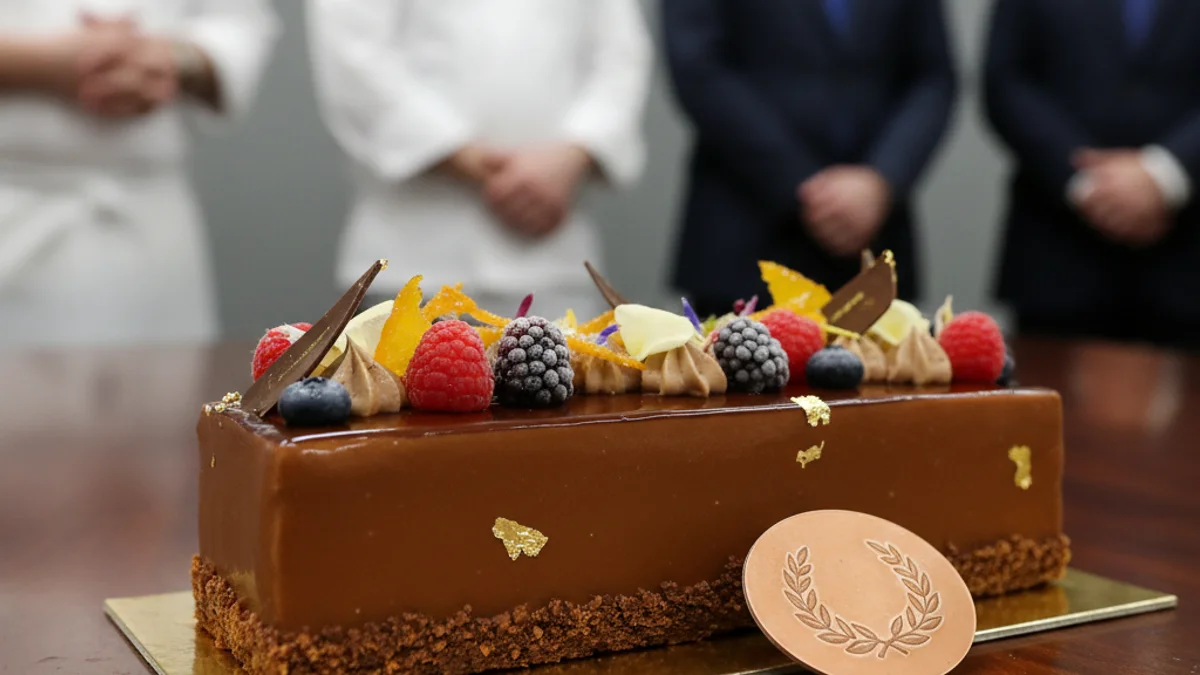
The pastry shops El Cigne (from Manresa), Gil (from Llívia), and Targarona (from Igualada) have been awarded the Fava d’Or 2026, distinguishing them as the best bakeries in Central Catalonia, the Pyrenees, and the territorial area of Garraf, Penedès, and Anoia, respectively. The awards ceremony took place last weekend during the ninth edition of the International Pastry Exhibition in Sant Vicenç dels Horts.
These special awards, known as Fava d’Or, are part of the broader Fava de Cacau awards, which recognize the 50 best pastry shops in the country. Both Gil and Targarona have successfully revalidated the title obtained in the previous edition. Other establishments honored with the Fava de Cacau include Pessics from Artés and Grau from Martorell.
The list of Fava d’Or winners by territorial area is completed by Morreig (Barcelona and surrounding regions), Cal Jan (Camp de Tarragona and Terres de l’Ebre), Tugues (Lleida and Ponent), and Tornés (Girona area). Regarding special distinctions, Magma BakweryLab (Barcelona) was recognized as the most innovative pastry shop, and Dolços Alemany 1912 (Amposta) received the award for the greatest historical value.
As a novelty this year, a new Fava d’Or prize was introduced, granted based on the individual votes of the 50 awarded pastry shops. This new award resulted in a three-way tie between Morreig (Barcelona), Carrió (Barcelona), and L’Obrador (El Vendrell). The jury, coordinated by specialist Marc Balaguer, consisted of pastry teachers, gastronomy journalists, and pastry chefs who do not own their own establishments.