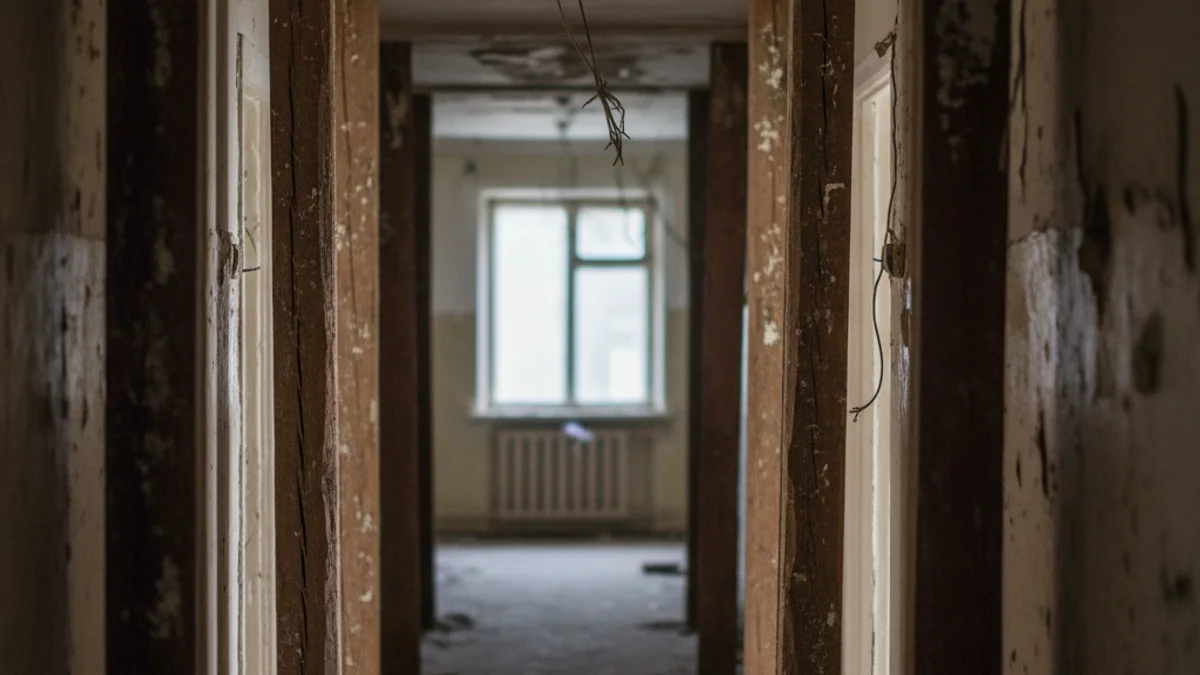
The situation of uninhabitability had been ongoing for months. Resident Elsie, mother of a 5-year-old, lived with support beams in the dining room, hallway, and other rooms of her apartment at number 24 on Carrer del Tigre. The Barcelona City Council had warned the owner of the need to take measures to keep the property in good condition and prevent collapses.
I don't know what we will do… I guess we will go to a hostel or a boarding house until we find something.
Despite having valid contracts and being up to date on payments, the property requested precautionary measures to evict seven tenants, alleging structural risk and that the homes were uninhabitable. The tenants, aware of the urgent need for reform, refused to leave without guarantees of rehousing or the ability to return to their homes, as required by law.
“"It is very hard and unfair that they treat us like this. We are just working people who pay the rent."
The case created a “legal tangle” as two different instruction courts reached opposing conclusions. The Instruction Court number 56 allowed two neighbors (Mireia and Montse) to stay, based on a report from the Barcelona Fire Department which concluded that, despite the shoring, there was no imminent danger of collapse of the building.
In contrast, the Instruction Court number 22 ordered the eviction of the other seven families, prioritizing a private architecture report commissioned by the property owner. Tenant unions (Sindicat Habitatge Socialista de Catalunya and Sindicat d’Habitatge del Raval) emphasize that the eviction is a precautionary measure. Four of the evicted families have been referred to the municipal service SIPHO for temporary accommodation.