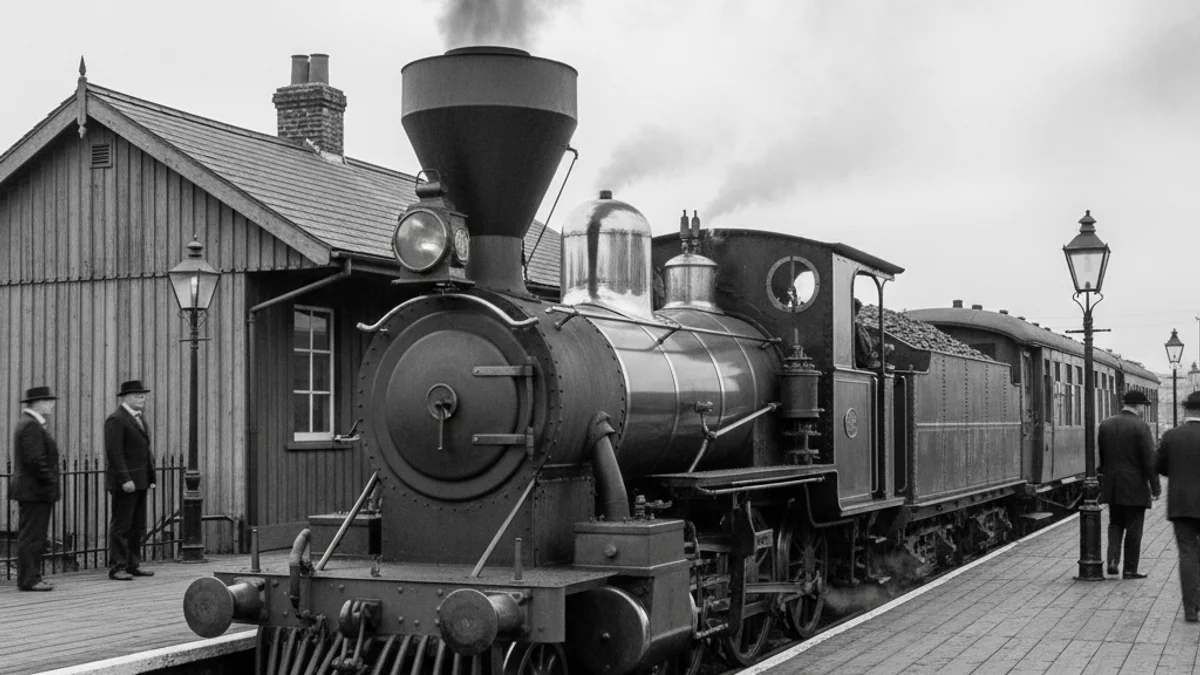
The history of the Barcelona-Mataró railway line, inaugurated in 1848, was marked by tension from its very beginning, as experienced by its promoter, Miquel Biada. This pioneer had to fight against a lack of investors and attempts at boycott, a situation that contrasts with the current crises affecting Rodalies.
Born in Mataró in 1789, Biada emigrated to Venezuela and, later, to Cuba, where he made his fortune. It was on the Caribbean island that he witnessed the inaugural journey of the first Spanish railway line (Havana-Güines) in 1837, and vowed to achieve a similar line for his native city.
When he returned to Catalonia in 1840, he struggled to secure local funding, and the project was ultimately saved by the investment of English capital, secured with the help of Josep Maria Roca. However, his health suffered due to his intense dedication to the construction.
Sabotage attempts on the works were attributed, among others, to stagecoach drivers who saw their business threatened, although this was never proven. What is certain is that Biada died on April 2, 1848, months before the train's inauguration on October 28, due to pneumonia contracted while guarding the works during freezing nights.
Despite his railway legacy, Biada's name, present in an institute and a statue in Mataró, carries the controversy of having been a defender of slavery, although it has not been proven that he directly participated in the trafficking of people.