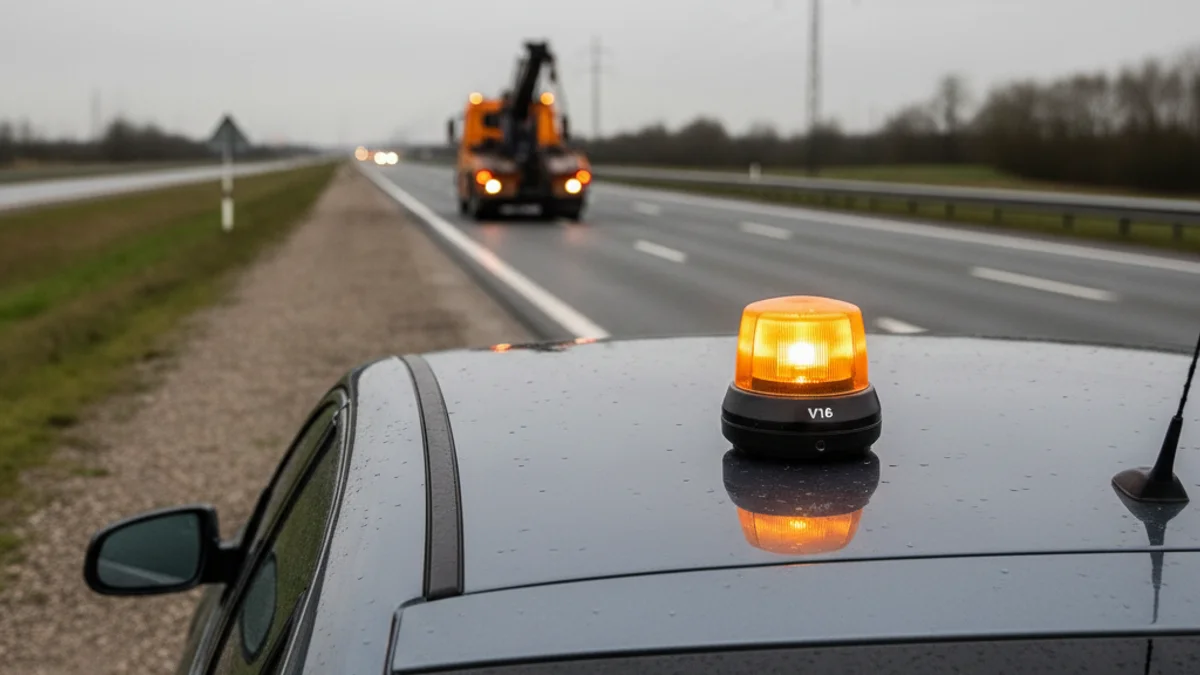
The spokesperson for the Unified Association of the Civil Guard (AUGC), Olaya Salardón, confirmed the existence of tow truck operators unaffiliated with insurance companies who attend to broken-down cars. They exploit the geolocation information that the V16 beacons transmit to the DGT map to arrive at the incident scene before the official assistance.
“"They take advantage of the driver's vulnerability; in that situation, they sign anything."
The scam can cost unsuspecting drivers between 170 and 300 euros, as the insurance company refuses to cover the unsolicited service. To prevent this, police and the Spanish Union of Insurance Entities (Unespa) remind customers that they should receive details, such as the name or license plate number of the official tow truck, beforehand.
The DGT denies having issued official warnings about these practices, although it confirms the existence of a register of roadside assistance vehicles. Furthermore, the Spanish Data Protection Agency (AEPD) clarified that the V16 beacon does not violate privacy, as the technical identifier it transmits is not associated with any person or license plate.
“"The initial assessment is positive. These devices are designed to reduce accidents; it is undeniable that people die every year getting out of their cars to place warning triangles."
Despite the positive assessment from the Royal Automobile Club of Catalonia (RACC), its spokesperson, Albert Puigdemont, criticizes the lack of public education by administrations regarding the correct use and implications of the new device, which has generated numerous controversies.