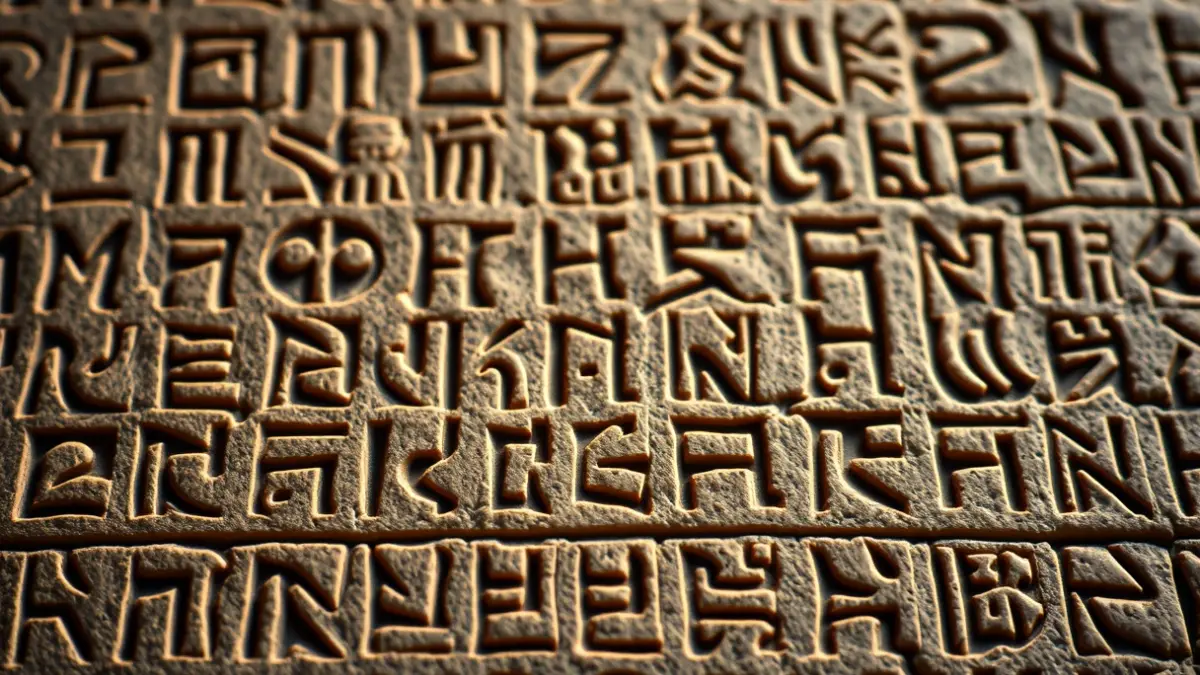
The ability to craft tools has defined the human species since its beginnings, with evidence in the Conca de Barberà of scrapers and points demonstrating practical intelligence. However, the alphabet stands as the most transcendental instrument created, an invention that has profoundly shaped our way of interacting with the world.
The idea of the alphabet, far from being attributed to a single mind, has circulated and transformed over time, solidifying itself as a pillar of communication. This tool, which allows the combination of units to create meaning, shares a surprising similarity with the human genome, which is also based on a long twenty-odd combinable units.
Between 'A' and 'Z', we humans are inscribed.
This analogy suggests that humans are, in essence, texts that are constantly written, read, and modified. This ongoing evolutionary process could be reinterpreted from the perspective of thinkers like Charles Darwin, who would have offered new insights into our continuous transformation.
Ultimately, the alphabet is not just a system of signs, but a constructive force that shapes our reality and our understanding of the world.