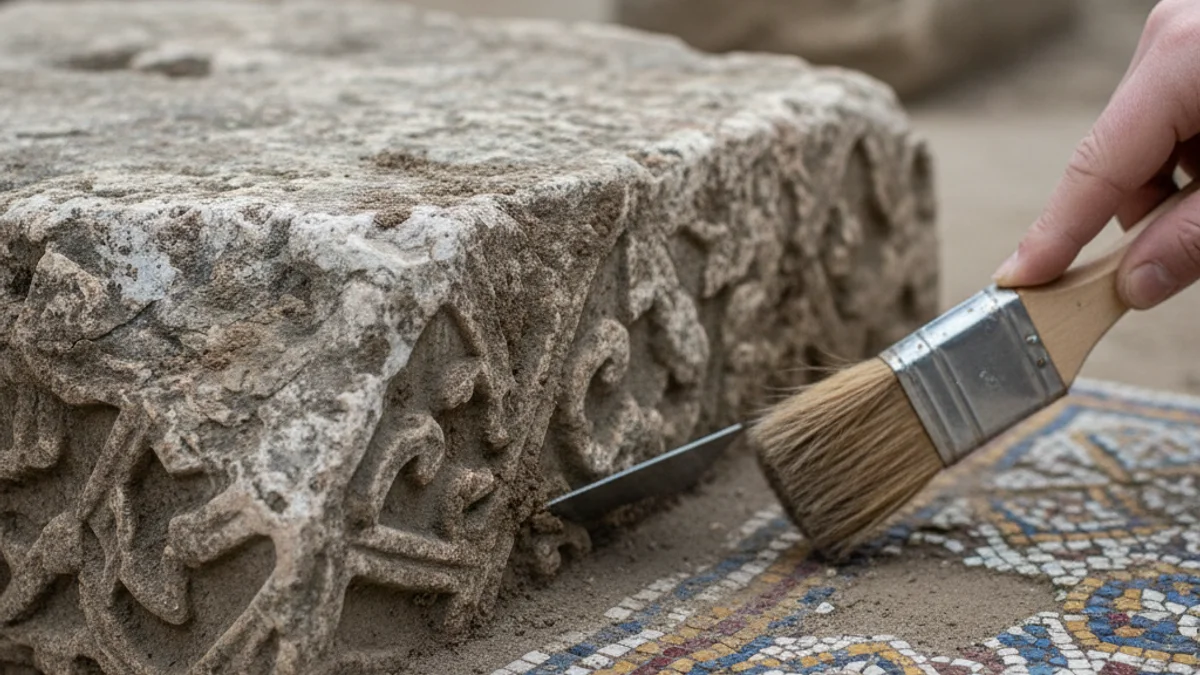
The work confirmed the interpretation of the space as a praefurnium, documenting the mouth of a furnace linked to the hypocaust, the heating system of the caldarium. This area was essential for feeding and maintaining the temperature of the baths.
During the excavation, archaeologists also identified structures related to water management, integrated into the walls. These elements suggest the existence of a water drainage or regulation system, possibly connected to an adjacent pool.
The presence of materials dated to the 4th and 5th centuries expands knowledge about the reuse of the building after it ceased functioning as a Roman mansion. These remains indicate that the space continued to be used in the late period.
This campaign is part of the project to enhance and future musealization of the Mujal site, also known as the Roser site, which was declared a Local Cultural Asset of Interest on June 3, 2021.