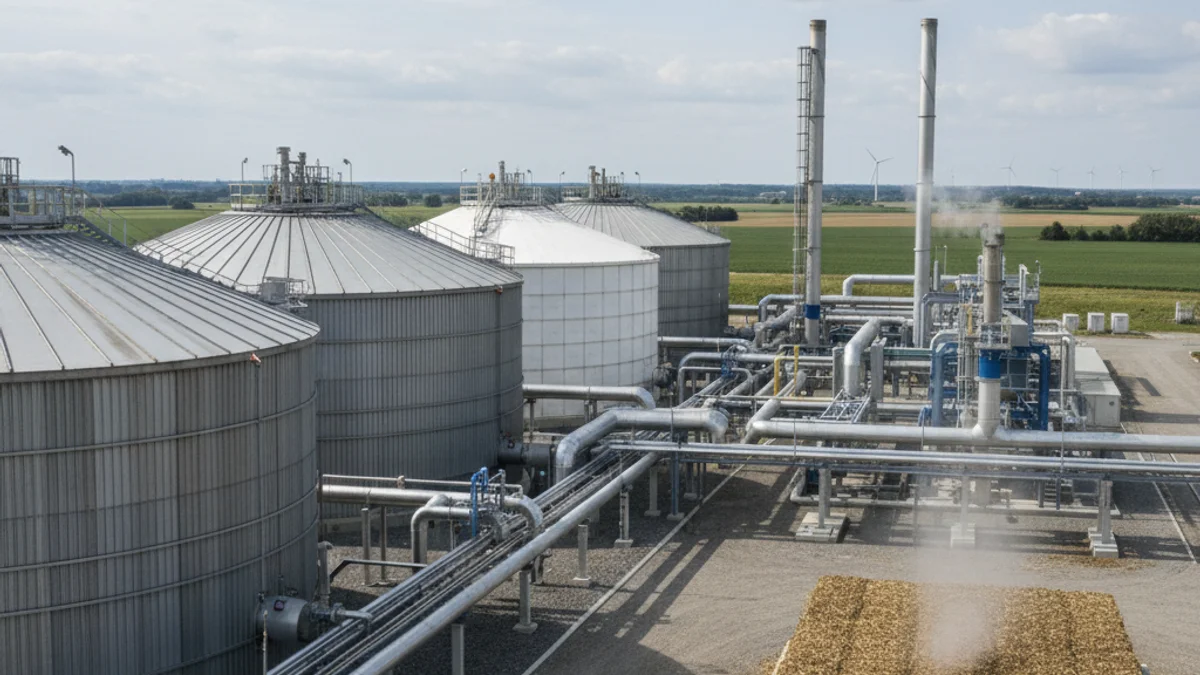
Since the approval of the Biogas Agenda 2024-2030 on May 8, 2024, aiming to generate 2 TW of biogas by 2030, economic and social measures have been implemented to increase the number of facilities. This strategy was accompanied by a Government aid package of 3 million euros to connect biomethane plants to the network.
However, the rapid proliferation of projects is generating strong rejection in affected communities, which do not consider these industries compatible with public health. According to Cunill, this rejection is justified by the lack of two key requirements: binding territorial planning with social participation, and prioritizing proximity and self-sufficiency, which are fundamental for the circular economy.
“"Without planning, control, and participation, no one should be subjected to pressure to accept this type of industry considered potentially polluting by the authorities."
A clear example of the lack of transparency is found in la Sentiu de Sió, in Noguera, concerning the Sentiu Bioenergia project. The project's Agricultural Management Plan (PGA), a mandatory technical document to justify the supply of local waste, allegedly includes a non-existent farm, assigning 70% of the slurry that supposedly would reach the facilities.
Joan Cunill describes this as a “very serious act” and criticizes the Generalitat for acting as a “necessary partner” for holdings like Naturgy instead of auditing. This opacity and speculative model promote the increase of large-scale farms and waste, escalating the contamination of groundwater with nitrates and other types of olfactory or air pollution.