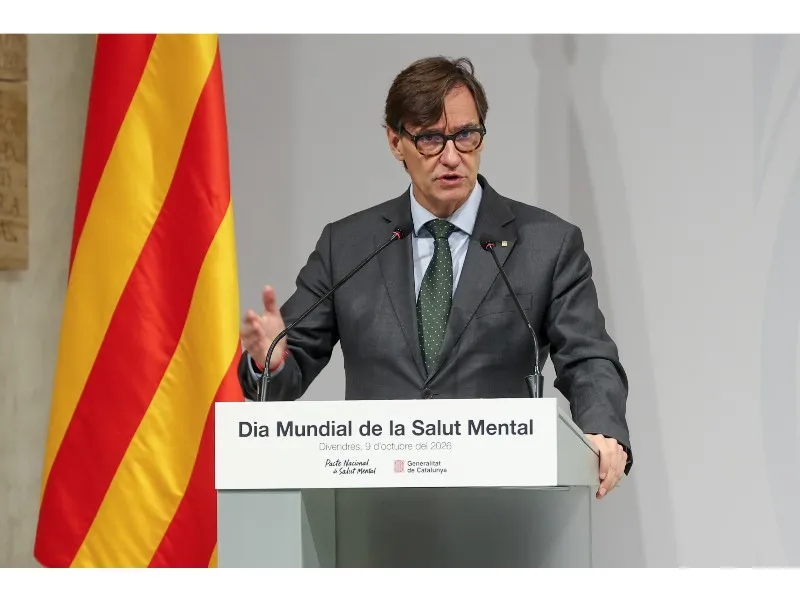
“"This protocol is a key tool to reach where we often cannot reach separately. With this alliance, we guarantee a 360-degree view that puts older people at the center."
The document, approved in November by the Local Governing Board of the Consell Comarcal, formalizes network collaboration to combat unwanted loneliness, one of the most complex social and health challenges today. Vice President Blanca López highlighted that the agreement marks a turning point in addressing aging in the region.
“"From Primary Care, we see every day how unwanted loneliness directly impacts the physical and emotional health of older people. The protocol allows us to act early and provide a more efficient, human, and comprehensive response."
The new circuit arises from the need for coordination between basic social services and health social work from the Primary Care Teams (EAP) in Flix and Móra la Nova-Móra d’Ebre. This initiative is part of the Strategy for a Long-Lived Society and a Full Life promoted by the Generalitat de Catalunya.
The methodology focuses on people over 65 years old and uses the Salut+Social application for the agile referral of cases detected at the CAP. For diagnosis, the Jong Gierveld test is used, a validated tool to objectively measure the degree of loneliness (moderate, severe, or very severe).
The personalized work plan may include the accompaniment and call service Enreda’t, memory workshops, or training in new technologies (TIC). The main goal is to promote active and healthy aging, with technical monitoring established to evaluate the improvement in emotional well-being after six months and one year.