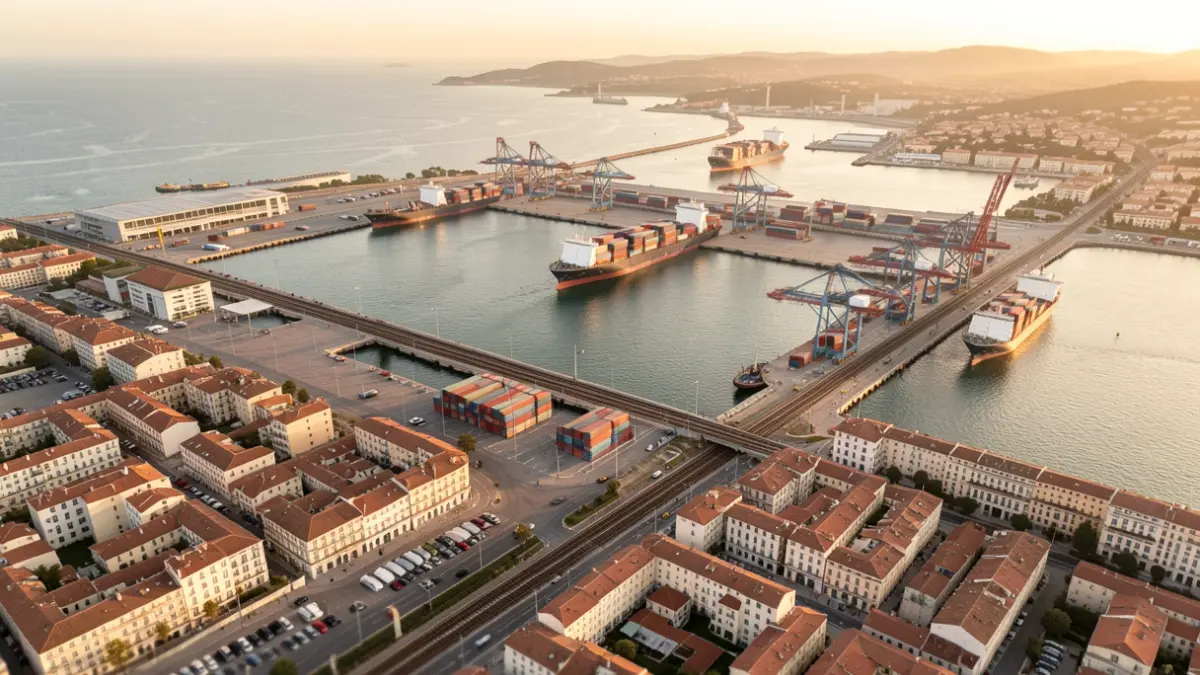
The increase in foreign buyers in the province of Tarragona occurs parallel to the final phase of the so-called 'golden visa' scheme, residence permits linked to high-value investments. Since the program's launch in 2014, a total of 834 permits have been granted, according to data from the Ministry of Inclusion, Social Security and Migration.
Most of these authorizations are associated with property acquisition, a factor that has reinforced the presence of foreign buyers in specific market segments. This context coincides with a scenario of severe tension regarding housing access, marked by rising prices and a scarcity of available supply.
Within this framework, the Generalitat (Catalan Government) is studying applying limitations to certain real estate transactions in areas considered stressed, a proposal that has reopened the debate on the role of foreign investment. The director of the UNESCO Chair in Housing at the Universitat Rovira i Virgili (URV), Héctor Simón, analyzes these measures cautiously.
“"Beyond the difficulty of defining exactly what a speculative purchase is, the measure implies a limitation on the free movement of capital."
Simón emphasizes that, so far, there is no solid empirical evidence directly linking property purchases by foreigners or investors to generalized price increases: "The report validating this measure does not provide sufficient data to demonstrate a clear causal relationship," he points out.
Furthermore, the expert warns of potential undesirable side effects: "Eliminating some buyers does not guarantee that prices will fall or that families with fewer resources will be able to access those homes; they will continue to face the same difficulties." In his view, an abrupt reduction in demand could also affect the rehabilitation of existing stock and the promotion of new housing, worsening the imbalance between supply and demand.