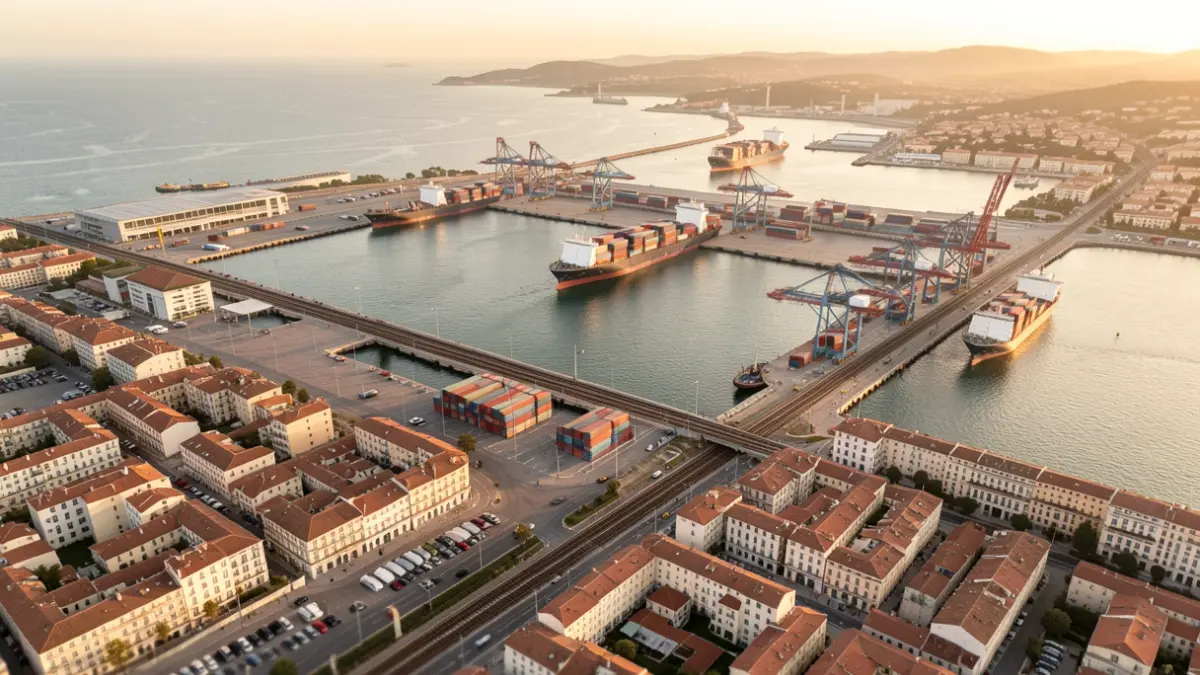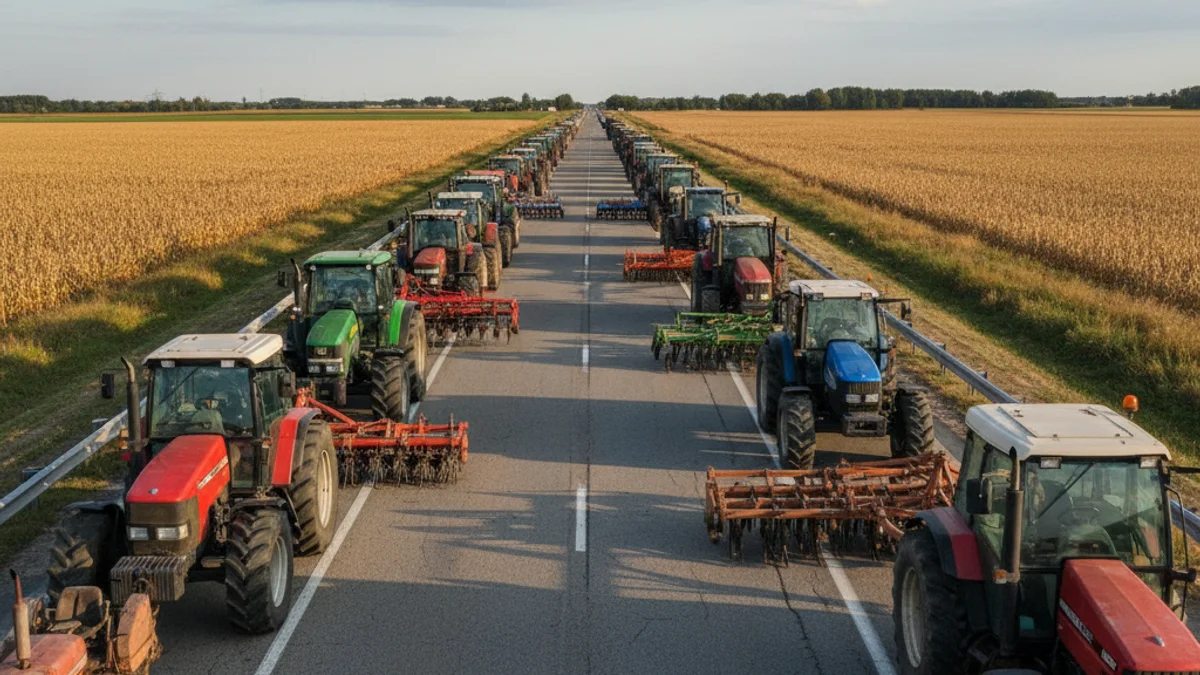
The day of protest, which began early Thursday morning, saw over a hundred tractors blocking the AP-7 and the N-II in Pontós, in the Alt Empordà region. Simultaneously, about sixty vehicles called by Revolta Pagesa blocked access to the A-27 at the Port of Tarragona, an action that remains in place.
“"the blockade will be indefinite and will last until the Spanish government renounces the agreement, which is scheduled to be signed next week."
The road closures spread to other key points of the Catalan road network, such as the A-2 in Bell-lloc d'Urgell and Fondarella (in Pla d'Urgell), the C-16 between Berga and Olvan, the C-38 at Coll d'Ares (in Ripollès), and several routes in Lleida and Tarragona. The Mossos d'Esquadra deployed a strong police presence, especially in the Pontós section, without incidents being reported.
Although the farmers concentrated on the AP-7 decided to reopen the N-II for light vehicle traffic to avoid affecting citizens, truck passage remains blocked. Protesters argue that the Mercosur agreement allows the massive entry of agricultural products produced using pesticides and hormones banned in the European Union, which constitutes “unfair competition.”
The sector demands that the agreement not be signed and that mirror clauses be implemented, forcing imported products to meet the same sanitary and labor conditions required of local produce. They also call for a “strong” CAP and “realistic and territory-adapted” health controls.