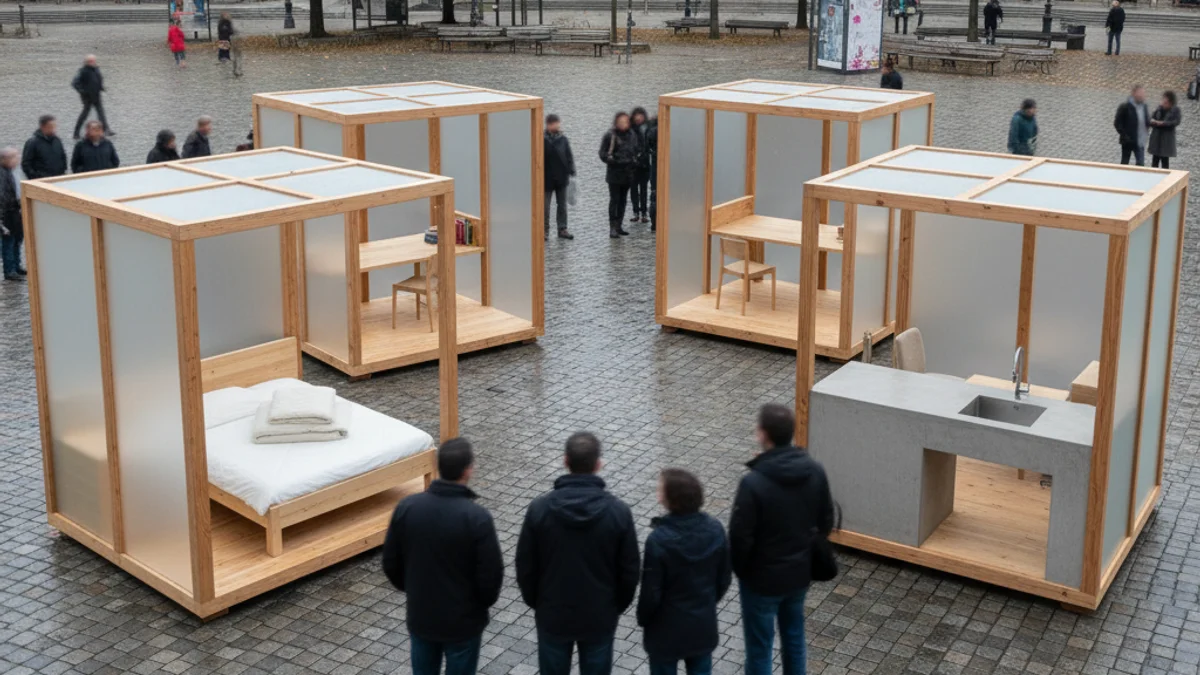
The architectural proposal, driven by students from the Escola Tècnica Superior d'Arquitectura del Vallès (ETSAV), reflects on the fragmentation of traditional domestic functions. According to Mercè Farrés, one of the 13 participating students, the modules represent common activities such as “Sleeping, working, cooking, washing, and cleaning oneself,” but physically separated into independent spaces.
“"The objective has been to exploit these actions that occur in a conventional dwelling and divide them into different modules, making it visible that it is not essential to concentrate them all in a single private space."
The students argue that dissociated habitability is especially relevant in environments like the university, where many students spend much of the day working in groups. This model, with modules that can be moved and swapped in position, is a possible response to current housing and daily life challenges.
“"In architecture, you need 24-hour spaces."
This installation in central Sant Cugat serves as a prelude to the 'Fòrum Sant Cugat', an open meeting that will take place at the ETSAV on Saturday, January 17, where the issue of housing access will be discussed.