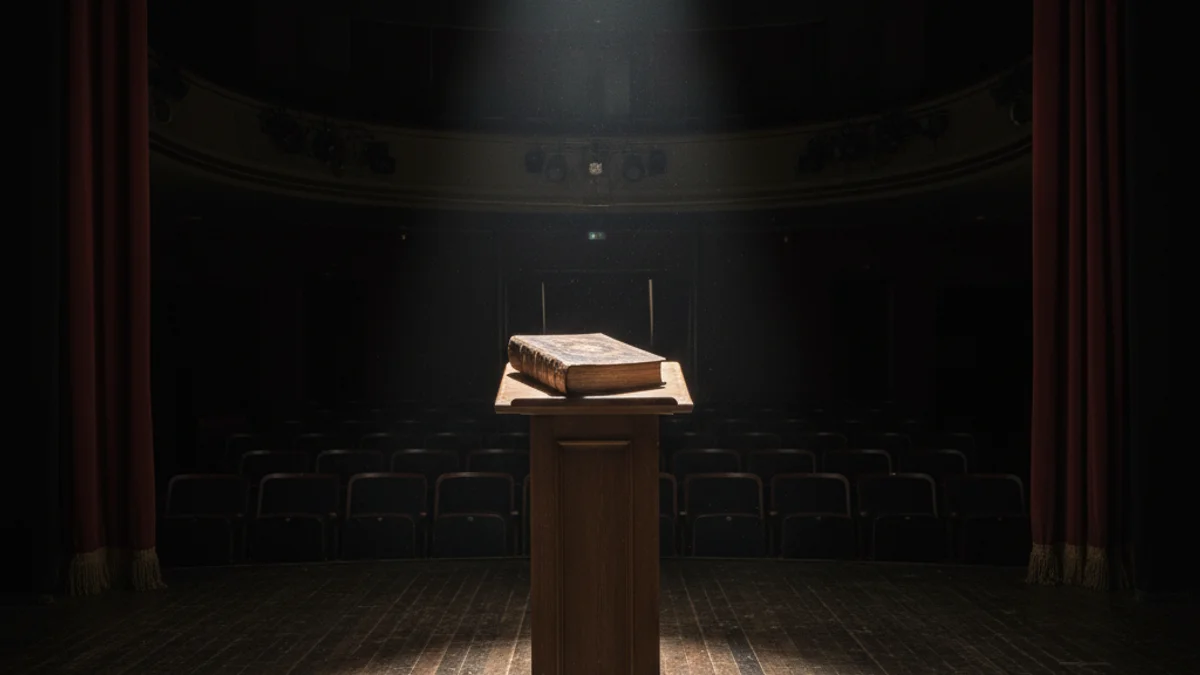
The show, premiered fifteen years ago by Òscar Intente, is based on the lecture The Idea of Europe that George Steiner delivered in Amsterdam in 2004. The piece explores the great paradox of the continent: how Europe, the cradle of great musical, philosophical, and literary geniuses, was capable of generating the worst horrors of the 20th Century, including the slaughter of 70 million people between 1914 and 1945.
This reflection is deeply marked by Steiner's biography, born in France in 1929 to Viennese parents. The family had to leave Europe in 1940 to settle in the United States, fleeing rising antisemitism. Of his classmates, only one survived five years later, a fact illustrating the pain radiating from history.
The turn of the century has not healed the original wound and has opened a second one, made of disappointment, with a feeling of exhaustion and failure.
The dramatization, performed in Terrassa in 2026, confronts an audience that sees how the goals of peace and justice that followed the post-war period have been devalued. It mentions recent events such as the repression of democratic mobilization in Spain in 2017, the Russian aggression in Ukraine, and the use of executioner methods in Gaza, with the protection of Netanyahu before the International Criminal Court.
The subsequent colloquium, facilitated by Núria Iceta, showed an audience that was disoriented and wounded, lacking the tools to confront the loss of values. The lack of intellectual and moral armament, prioritizing consumerism and neglecting humanistic education, distances society from the idea of Europe that Steiner still dreamed of before his death.