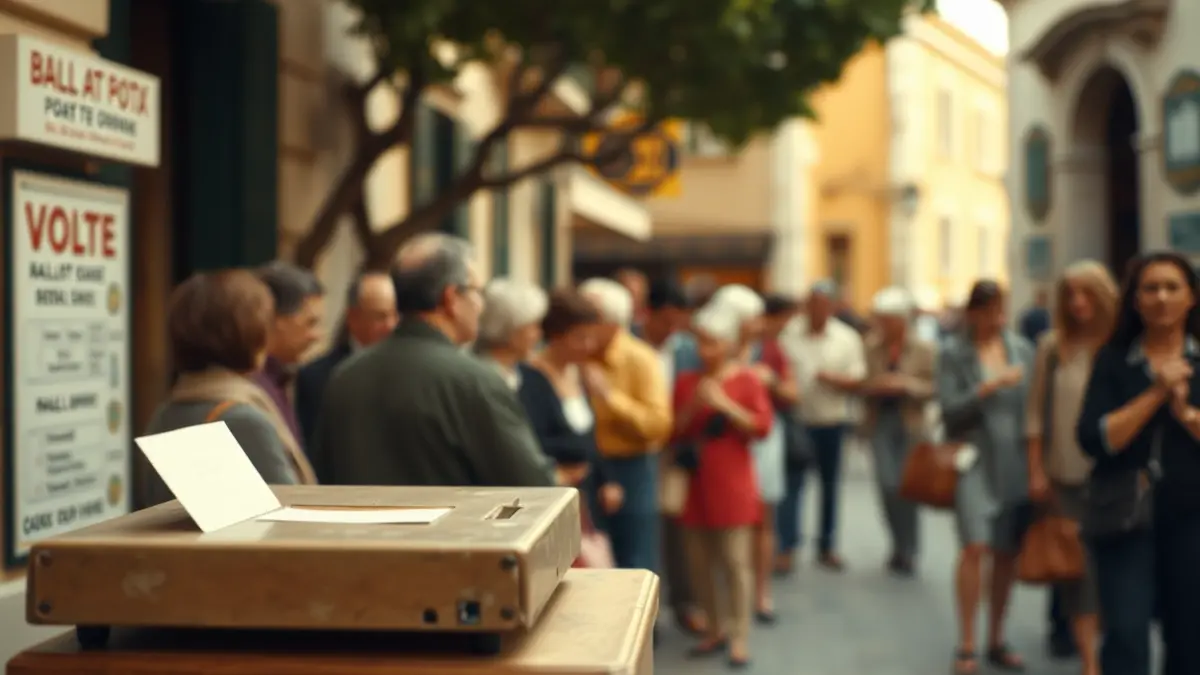
The 1986 popular consultation on Spain's continued membership in the North Atlantic Treaty Organization (NATO) polarized society and politics. In Sabadell, voter turnout was remarkably high, with 68% of the electoral census casting their ballots. The local result was a clear victory for the 'No' vote, which garnered 49,013 votes (51.2%), surpassing the 'Yes' vote with 43,003 votes (44.8%). This trend held in most of the city's districts, with the exception of the northern (Ca n'Oriac-Can Deu) and southern (Creu de Barberà-Espronceda-Termes) neighborhoods, where the 'Yes' vote secured a majority.
At the national level, turnout was 60%, with the 'Yes' vote prevailing with 56.8% of the votes (9 million), compared to 43% for the 'No' vote (6.8 million). However, the 'Yes' victory was nuanced by the fact that the 'No' vote won in all four Catalan constituencies, the three Basque ones, and Navarra, as well as in the province of Gran Canaria, highlighting the political differences between the historical nationalities and the rest of the State.
Spain's entry into NATO had occurred on May 30, 1982, under the presidency of Leopoldo Calvo Sotelo (UCD). This decision was made in a context of increasing Cold War tensions, with an anti-communist foreign policy from the United States. Initially, the PSOE had advocated for a 'NATO, not yet' stance, committing to holding a referendum and supporting withdrawal from the alliance. However, after Spain's entry into the European Economic Community (EEC) on January 1, 1986, the party leadership radically shifted its position, advocating for permanence with three conditions: no integration into the military structure, prohibition of nuclear weapons, and reduction of US military bases.
The 'No' campaign in Sabadell was intense, with the mobilization of various civic entities, neighborhood associations, trade unions, and left-wing parties. The PSC, for its part, organized events with the presence of prominent figures such as Javier Solana, then Minister of Culture and government spokesperson, and future NATO Secretary General. Tensions were palpable, with protests at some of the socialist rallies. The PSUC also held numerous events, with the participation of leaders like Gerardo Iglesias and Mayor Antoni Farrés.
“"The NATO referendum offered the possibility of a new Europe, and the results have been a great lost opportunity."
The day after the referendum, Mayor Antoni Farrés assessed the results with a bittersweet feeling. He positively highlighted the high turnout and the victory of the 'No' vote in the city, although he had hoped for a wider margin of votes. He also expressed surprise and concern about the 'Yes' victory in some neighborhoods, pointing to the need for a deeper analysis. His final reflection was that the referendum had represented a lost opportunity for a new Europe.